


YUDELNIK
Distance – It is located 28 km east of the center of the city of Ruse , 11 km south of the municipal center of the city of Slivo Pole .
Old names – none. According to some researchers, the name of the village comes from a place rich in water – Vodenlik. It is also interpreted as Otdelnik changing the letter “o” to the letter “yu”, since it stands a little away from the settlements in the area. In time, after the secondary iotation of the letter “v”, it changed to Yudelnik. According to others, the name means the road to the mill. There is a mill in the village and everyone grinds flour in it.
Population according to censuses over the years
1881 – 508 people
1888 – 563 people
1934 – 1324 people
1946 – 1485 people
1956 – 1531 people
1985 – 1373 people
1992 – 1176 people
2000 – 1028 people
2010 – 862 people
2022 – 632 people
First data
During archaeological research near the village of Yudelnik, two small mounds were discovered, as well as pieces of Roman armor and bronze helmets from the 4th century BC. The helmets are owned by the Regional History Museum – Ruse.
St. Dimitrov notes in “Mapping Ancient Helmets from Bulgaria”: “The eight helmets at Yudelnik are of the same type, which, however, should not lead to the idea of a production center. All were repaired many times, so they were apparently subsequently treasured. Despite the damage caused during the discovery, they were probably whole, not fragmented scraps. It is clearly either an arsenal or some kind of ritual associated with the two nearby small mounds.”
The village is located between two hills. According to local legends, poor villagers from the village of Tetovo carried firewood to Slivo Pole and sold it there. Then the plague broke out. People began to leave the villages. They climbed one hill, but a cold wind blew and they went down into the ravine and began to live there. After the plague epidemic, the population moved west from their old place of residence. According to another legend, among the local population there is a story about Judas the robber, who lay in wait with his band of people in the forests and robbed them.
Many of the families were immigrants from the village of Gagalya, today part of the village of Nikolovo and Northern Dobrudzha, when they fled from the Romanians.
Its name was first mentioned in documents from Turkish archives in 1694 and 1734. The main occupation of the population was agriculture and cattle breeding, for which the climatic conditions were very suitable. A large part of the people also made a living from woodworking.
Yudelnik after the Liberation
Immediately after the Liberation, on the initiative of the Russian provisional authorities, in 1878, village municipal administrations were established. They were a continuation of the councils of elders. They organized their activities according to the Provisional Rules. In 1879, elections were held and the legal village councils began. A village municipal administration was established in the village of Yudelnik, Ruse region.
The newly elected village councils are faced with long-overdue issues such as the development and water supply of the settlements, organizing education and healthcare, improving the lives of the population, and others.
After the Liberation, the main population – Turks – emigrated to the Ottoman Empire and were replaced by Bulgarians from the interior of the country. The main occupation was agriculture and animal husbandry.
In 1936, Marin Spasov founded the “Forest Traveler” Physical Education Society. Among the first members were Georgi Botev, Ivan Yankov and Georgi Spasov.
Many of the houses, as well as the school, were built from the stones – foundations of mills, found in the southern part of the village, as well as from the Roman road, passing through the land of the village of Yudelnik and reaching all the way to Ruschuk, today the city of Ruse. To this day, water still flows in the southern part of the village – probably due to the displacement of the earth layers and often causing the collapse of residential buildings.
In 1926, the District Veterinary Service was opened in the village of Slivo Pole, which served a large area including the villages of Borisovo, Kosharna, Marten, Sandrovo, Stambolovo and Yudelnik. Since its establishment, the service has made a significant contribution to the development of both private and public animal husbandry. It organizes work on protecting domestic animals from infectious diseases, improving hygienic conditions for their breeding, controlling the production of products of animal origin and regulating trade.
Yudelnik after September 9, 1944
For the period 1946 – 1958, the local government in the village of Yudelnik solved problems of agriculture, trade, supplying the population with food products, and improving the infrastructure of the municipality.
The Chairman of the Rural People’s Council – village of Yudelnik for the period 1946 – 1953 was Dimitar Ivanov Atanasov.
From 1956 to 1959, the village of Yudelnik was the center of a municipality, which also included the village of Hotantsa. After 1959, the village became part of the Municipality of Slivo Pole, Ruse Region.
The City Hall manages the administrative, economic, health, social and cultural life in accordance with the powers granted to it.
The village is electrified, has water supply and communication networks.
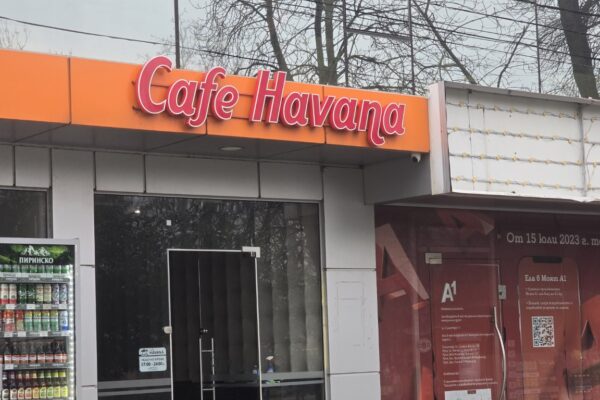
Consumer Cooperative “Nezavisimost” – village of Yudelnik has been operating since before 1944. In 1945, the cooperative opened a general store, and after 1952 – a knitwear and textile store. In 1947, public catering was launched and a khoremag and a pastry shop were opened. Along with trade and public catering, deposit-taking, lending, and the purchase of agricultural products were developed, a cooperative dairy was created for the collection and processing of milk, a cauldron for distilling brandy, etc. Since 1947, a cooperative bakery has been opened.
In 1959, the Nezavisimost cooperative merged with the cooperatives in the villages of Borisovo, Kosharna and Stambolovo.
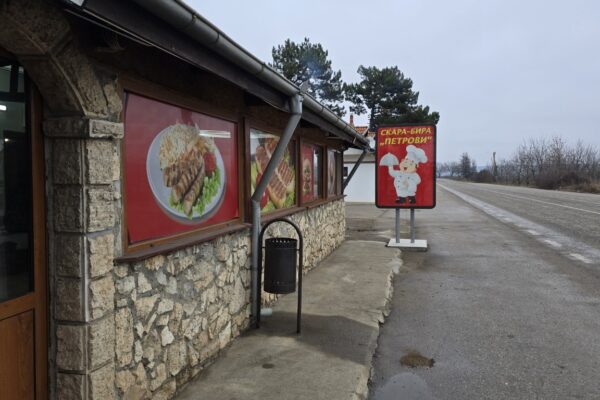
In 1976, a bus stop with a shop was built, 800 sq. m of sidewalks were made. Asphalting and paving of streets began, which amounted to 8200 leva.
A shopping complex has been built in the center of the village, it has its own bakery and a cinema. Since 1982, an automatic telephone exchange with 280 telephone posts has been operating. Over 54% of the streets are asphalted. A ritual hall and a Youth Center have been opened.
By Order No. 37 of March 23, 1974, the Bureau of the Council of Ministers established a Scientific and Production Association for Pig Breeding in Shumen. On the basis of this order, two enterprises were established – in the village of Golyamo Vranovo and in the village of Yudelnik, which were separated from the fattening activity of the Ruse Meat Processing Plant and became subordinate to the Scientific and Production Association for Pig Breeding in Shumen. The subject of activity of these enterprises is scientific research, design, construction and technological work in pig breeding. Work is being done on the creation of hybrid pig breeds. By Order No. 146 of May 1, 1976, the Council of Ministers established a Joint Enterprise for Hybrid Pig Breeding (OPHS) – Ruse, which united the pig complexes in the villages of Golyamo Vranovo, Nikolovo and Yudelnik. In February 1977. The agro-industrial complexes in the district transferred 21 commercial pig farms to the OPHS – Ruse. Three branches of the OPHS were established for their management – Ruse (including farms in the villages of Bazan, Dolno Ablanovo, Krasen, Nisovo, Pisanets and Tserovets), Borovski (including farms in the villages of Baniska, Borovo, Gorno Ablanovo, Ekzarh Yosif, Zahari Stoyanovo, Pomen and Chilnov) and Belenski (including farms in the villages of Bosilkovtsi, Byala, Dolna Studena, Dryanovets, Novgrad and Piperkovo). Intensive production methods were introduced, year-round farrowing, early weaning of pigs, replacement of old herds with hybrids, etc. The nucleus bases in the villages of Golyamo Vranovo and Nikolovo produce male and female breeding animals for their own reproduction and females for reproductive bases in the country. The reproductive base in the village of Yudelnik produces only female breeding animals that meet the needs of the OPHS in Razgrad, Ruse, Silistra and partly in Targovishte District. There are two breeding bases – in Dolno Ablanovo and Tsenovo. By Decision No. 4 of November 29, 1990 of the Ministry of Agriculture and Food Industry, the state company “Industrial and Hybrid Pig Breeding” – Ruse was established. The organizational production structure of the company includes the pig complexes in the villages of Brushlen, Golyama Vranovo, Nikolovo, Chervena Voda and Yudelnik. By Order No. 15 of January 6, 1992 of the Council of Ministers, on the basis of Art. 1, para. 1 of the Law on the Formation of Sole Proprietorship Companies with State Property and in connection with Art. 147 of the Commercial Act, “Industrial and Hybrid Pig Breeding” EOOD – Ruse was established with the following activities: production of pork, breeding and pedigree animals, other farm animals and fish, cereals, feed mixtures, transport, construction and technological services, commercial activities in the country and abroad. By Order No. 118 of November 17, 1993, the Council of Ministers terminated the activities of “Industrial and Hybrid Pig Breeding” EOOD – Ruse.
The main livelihood of the population is agriculture. Cereals, vegetables, fruits, as well as farm animals (poultry, sheep, pigs) are grown.
Church
For many years there was no church in the village, only a mosque.
On June 14, 1936, a village meeting was held, at which a Committee was established to collect funds for the construction of a church in the village. The Committee was approved by the Diocesan Council on July 27, 1936. In 1948, the Church Board of Trustees adopted a decision to build a small temple with dimensions: length about 10 m and width 6 m or area 40 sq. m. The project of the church was assigned in 1951 to the Architectural Department of the Holy Synod.
The churchyard was separated from the municipal square and given for use by the Board of Trustees around 1940. Part of the yard was donated by a private individual. In 1961, it was expropriated in order to build a bakery. The Board of Trustees decided to purchase another plot of land where to place the bell and where a chapel could later be built, but the Diocesan Council did not allow it and suggested that the priest take steps before the local authorities, so that in exchange for the taken plot they would allocate another.
The foundation stone of the church “St. Demetrius of Solun” was consecrated by the Metropolitan of Ruse, Neophyte, on November 2, 2001. The plot was granted by the Municipality with the right to build.
The building is a single-nave basilica. The bell tower is above the entrance, next to the western facade. The project was prepared by arch. Anna Savova from Ruse. The church has an area of 72 sq. m. Construction began in August 2002.
When it is built with donations from the local population, Christians and Muslims are included as funds, materials, and craftsmen. The mosque’s trustees also help.
The building was completed in 2004 with funds from the government’s “Small Demonstration Sites” program. It was consecrated on October 25, 2005 by Bishop Jacob of Mesemvria. Both Christians and Muslims attended the consecration of the chapel.
The iconostasis is a paneled one, made by master Tsvetan Nikolov from the village of Borisovo. The icons are printed on paper.
Near the entrance to the temple there is a fountain on which a marble slab reads “Drink and remember Ivaylo and Salzitsa Nanevi.”
Today, a festival dedicated to the saint St. Demetrius is celebrated – October 26th – by the entire village.
School
It was established in 1905. In 1935, a junior high school was opened at the school. It continued its activities after 1944.
The year of the Turkish school’s founding is unknown. It existed independently until 1959, after which it merged with the Kliment Ohridski National Primary School – Yudelnik village.
In the 1964/1965 school year, a 7th grade was opened. On September 1, 2008, the school was closed, and its documentation was transferred to its legal successor, the Secondary Comprehensive School “St. Paisii Hilendarski” – town of Slivo Pole, Ruse region, which was designated as a central school when taking measures to optimize the school network in the municipality.
In the village there is a branch of the “Happy Childhood” preschool “Winnie the Pooh” in the town of Slivo Pole.
Community center
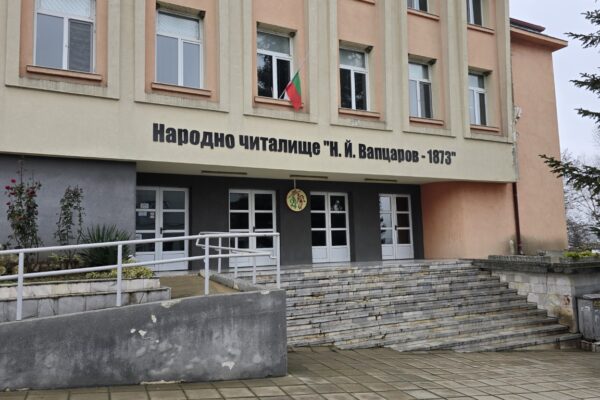
In 1929, the teacher Stefan Popov founded the community center in Yudelnik. At that time, it was called “Know Yourself”. Founded in 1929, it is a spiritual center in Yudelnik. The village has an exceptional cultural heritage in the form of authentic folk songs, knowledge about the world and customs. It is an example of how Christians and Muslims help each other and live together.
In 1950, a radio was purchased and delivered, and radio listening to the news from Radio Sofia was arranged almost every evening. Lectures were given. Literacy courses were organized. A dance group with the pioneers, chess and backgammon games, and talking hornets were organized. The chairman was Angel Iv. Senkov, and the secretary was Stefan Kovachev. The community center had 104 members.
In 1952, community center activists organized a mobile cinema, read the newspapers “Dunavska Pravda”, “Rabotnichesko Delo”, “Cooperative Agriculture” and “Cherveno Zname” in front of an agitation point at the threshing floor. They wrote slogans and distributed books.
In 1955, a new community center building was built and then renamed “Vladimir Mayakovski”. Thanks to the educational activities of the community center, the traditions of the different ethnic groups have been preserved to this day.
The community center carries out a wide range of activities and supports the creation and development of other community centers in this region and the country. Its historical contribution to the cultural activity of the village of Yudelnik is determined by its contribution to the preservation and enrichment of the Bulgarian language, the birth of musical art and the creation of librarianship.
The library organizes open lessons, talks, corners and showcases, cultural events related to the book. Students are introduced to the requirements, conditions and ways of using the necessary literature in the library, and the work with the youngest children is aimed at building interest in the book. Today, the community center has founded: A group for original folklore and a folk dance club.
Labor Cooperative Agricultural Farm “Vulko Chervenkov ” – village of Yudelnik, Ruse Region
On March 23, 1949, a meeting was held and the TKZS was established. Angel Senkov was elected chairman of the meeting, and Damyanka Senkova was elected secretary. At the beginning, the TKZS had 8 members, of whom 8 were elected members of the Management Board and 5 members of the Control Board. Dimitar Ivanov Dimitrov was elected chairman. The TKZS set itself the goal of grouping the land, uniting the agricultural equipment and livestock for common organizational work to overcome the backwardness of the personal farm and to ensure a better and more prosperous life for the members. The farm began operating on March 27, 1949. The following year, 1950, the farm cultivated 1,200 decares of land and 20 workers, and in 1956 the land increased to 12,500 decares and 400 workers. With the increase in the number of cooperators, the mechanization of the farm was gradually implemented. In 1951, the first combine harvester was put into operation on the blocks of the TKZS. Until 1955, the farm was served by the MTS – village of Babovo, and after 1955 by the newly opened MTS in the village of Slivo Pole.
The first barn was built in 1950, and later other farm buildings. Important issues of the TKZS are decided by the General Assembly and the Board of Directors of the TKZS.
In 1959, the Labor Cooperative Agricultural Farms (TCAF) in the villages of Borisovo, Kosharna, Stambolovo and Yudelnik were united into the United TCAF “Dawn of Communism” – village of Borisovo. This created conditions for increasing labor productivity and reducing the cost of production. The United Farm owns 53,300 decares of land. The main directions for development are crop production, animal husbandry and side activities.
At the beginning of 1969, the cooperative farms were reunified. On August 8, 1970, the Agrarian-Industrial Complex “Soviet Russia” was established – the village of Slivo Pole, Ruse Region (1970 – 1989), after the merger of the labor cooperative farms in the villages of Babovo and Slivo Pole. The agrarian-industrial complex covers the villages of Babovo, Borisovo, Brushlen, Golyamo Vranovo, Kosharna, Malko Vranovo, Marten, Ryahovo, Sandrovo, Slivo Pole, Stambolovo and Yudelnik. The cultivated land is 202518 decares, and the arable land is 190636 decares. The production direction of the complex is plant and animal husbandry with industrial activity of the canning and processing industry. By Decree No. 515 of May 27, 1976 of the State Council of the People’s Republic of Bulgaria, the complex was awarded the Order of Georgi Dimitrov and the Red Banner of the Ministry of Agriculture and Food Industry. In order to improve the qualification, training and retraining of workers, by Order No. 1258 of the Committee on Labor and Wages under the Council of Ministers in 1977, a Professional Training Center was opened at the Agricultural Complex “Soviet Russia” – the village of Slivo Pole. By Decree No. 922 of 1987, the Complex Brigades in the villages of Babovo, Borisovo, Sandrovo, Slivo Pole and Stambolovo were separated from the complex.
In Yudelnik, over 100 people put their labor into the 4th brigade of a new type, taking care of 1700 decares of fertile land. They enjoy good yields from the unity of the vineyard in the agricultural complex, from fruits and vegetables, and the successes of the sheep farm. 180 people work in the modern Reproductive base for pig breeding.
By Decision No. 37-00-24 of August 17, 1989 of the National Agrarian and Industrial Complex, the agrarian and industrial complex in the village of Slivo Pole was closed. In the 1990s, the TKZS was declared in liquidation.
By Order No. 37 of March 23, 1974, the Bureau of the Council of Ministers established a Scientific and Production Association for Pig Breeding in Shumen. On the basis of this order, two enterprises were established – in the village of Golyamo Vranovo and in the village of Yudelnik, which were separated from the fattening activity of the Ruse Meat Processing Plant and became subordinate to the Scientific and Production Association for Pig Breeding in Shumen. The subject of activity of these enterprises is scientific research, design, construction and technological work in pig breeding. Work is being done on the creation of hybrid pig breeds. By Order No. 146 of May 1, 1976, the Council of Ministers established a Joint Enterprise for Hybrid Pig Breeding (OPHS) – Ruse, which united the pig complexes in the villages of Golyamo Vranovo, Nikolovo and Yudelnik. In February 1977. The agro-industrial complexes in the district transferred 21 commercial pig farms to the OPHS – Ruse. Intensive production methods were introduced, year-round farrowing, early weaning of pigs, replacement of old herds with hybrids, etc. The reproductive base in the village of Yudelnik produces only female breeding animals that meet the needs of the OPHS in Razgrad, Ruse, Silistra and partly in Targovishte districts.
By Decision No. 4 of November 29, 1990 of the Ministry of Agriculture and Food Industry, the state-owned company “Industrial and Hybrid Pig Breeding” – Ruse was established. The organizational production structure of the company includes pig farms in the villages of Brushlen, Golyama Vranovo, Nikolovo, Chervena Voda and Yudelnik. By Order No. 15 of January 6, 1992 of the Council of Ministers, on the basis of Art. 1, para. 1 of the Act on the Formation of Sole Proprietorship Companies with State Property and in connection with Art. 147 of the Commerce Act, “Industrial and Hybrid Pig Breeding” EOOD – Ruse was established with the following activities: production of pork, breeding and pedigree animals, other farm animals and fish, cereals, feed mixtures, transport, construction and technological services, commercial activities in the country and abroad. By Order No. 118 of November 17, 1993 of the Council of Ministers, the activities of “Industrial and Hybrid Pig Breeding” EOOD – Ruse are terminated.
1994 “Svinekompleks – Yudelnik” was opened – Yudelnik village. Scope of activity: production of pork, breeding and pedigree animals, small pigs, other farm animals, meat and meat products, feed mixtures, transport, construction and technological services, trade in the country and abroad.
In the local elections in 2023, Muallya Pashova from the PP MRF list is the new mayor of Yudelnik.
Monuments
In the center of the village, a monument to the murdered Remsist Marin Spasov has been erected.
Monument to those who died in the wars of Bulgaria 1912-1918.
The monument is dedicated to the Bulgarian soldiers from the village who died in the Bulgarian wars of 1912-1913 and 1915-1918. The monument is built on the bridge in the central part of the village. There is a black memorial plaque on which the names of the dead are inscribed.
Sources:
State Archives – Ruse, file 371 K, file 486; file 487 k; file 554; file 556
https://www.nsi.bg/nrnm/reports/population/list/5263
https://www.nsi.bg/statlib/bg/lister.php?iid=DO-010000010&page=104
https://chitalishta.com/index.php?act=community&do=detail&id=629®_num=683
Mutafov, V. History of the temples in the Ruse diocese. Part One. Ed. Kovachev. S. 2019, p. 324; Dimitrov, Stanimir. Mapping of ancient helmets from Bulgaria. – IRMVT, XXII, 2007, pp. 52 – 63.