


DUNAVEC
Location – The village is located 14 km from the municipal center Tutrakan and 3 km from the village of Pozharevo. Located on the Danube River between kilometer 421 and kilometer 422 along the coastline, starting from Germany to the Danube Delta.
Old names – Bulgarian Slivovo, Spanchov. By ministerial order 2191/promulgated on 27.06.1942, the village was renamed Dunavets, after the Danube River, on whose bank it is located.
Population, according to censuses over the years
1888 – 261 people
1893 – 270 people
1900 – 410 people
1905 – 551 people
1934 – 599 people
1941 – 606 people
1946 –669 people
1985 – 52 people
2000 – 40 people
2022 – 6 people
First data
In his 1972 study, historian Racho Zmeev published a collection of flint artifacts stored in the collection of the Historical Museum – Tutrakan. According to him, the materials from the village of Dunavets date back to the Late Paleolithic.
In the Archaeological Map of Bulgaria, Dunavets is present with: 1. Late antique settlement and Old Bulgarian fortification in the Kaleto area. It is located 0.550 km with a 7 ° azimuth relative to the center of the village. Pasture. Elevation. On the Danube bank at kilometer 421. Altitude 25 – 65m. Area of the site about 50 acres. Shards from the 4th – 6th centuries and from the 8th – 10th centuries have been discovered. Moat and rampart. Today, the finds on the surface are of small concentration and multi-centric grouping. The previously registered plan of the fortification is not visible today. Burials from the ancient era. 2. Settlement from the Roman and late antique era, fortification from the First Bulgarian State in the Kurshum Kale area. It is located 2.250 km with a 64 ° azimuth relative to the center of the village. Low Danube terrace. Altitude 15 – 45 m, Area about 300 acres. Shards from the mentioned periods have been found – small concentration and multicentric distribution. The plan of the fortification is not recognizable today on the terrain. During agricultural work at the western end of the area, burials from the Roman era were discovered, carried out by burial and cremation – a necropolis.
Dunavets during the Renaissance
The settlement arose in the 16th – 17th centuries.
According to the locals, the name Spanchov originated during the Russo-Turkish War (1768 – 1774), when the commandant of this region was the Russian officer Spanchov. He honoredly protected the Bulgarian Christian population from the invasion of Turks, Circassians and Bashibazouks. When the Russian troops withdrew, the population, in gratitude, decided to rename their village from Bulgarian Slivovo to the village of Spanchevo, and later to Spanchov.
During the Russo-Turkish Wars, the entire Bulgarian population emigrated across the Danube to Wallachia and founded the village of Spantsov on the opposite bank.
Despite the mass exodus, the Tutrakan region was not de-Bulgarized. A significant part of the Bulgarian Christian population in the villages around Tutrakan survived and continued to live there. These old Bulgarians, known as “grebentsi” or “eliytsi” (which means local residents), are preserved in the villages of Star Smil (Staro Selo), Kadıköy (Malak Preslavets), Spanchov (Dunavets), Sarsanlar (Zafirovo), Belitsa, Brushlen and Denizler (Varnentsi).
According to the local tradition and the inscription on the monument in the churchyard, the settlement was inhabited by Abazas until 1856. They practiced Islam, because the inscription reads: “When the Abazas fled, they left a mosque…”
In 1867, Panayot Hitov’s detachment, with standard-bearer Vasil Levski, crossed the Danube from Romania and landed on the Bulgarian shore in the land of the village of Dunavets – in the Kurshumliite area.
In the 1860s, Circassians settled in the village, they did such evil to the surrounding villages. The Circassians are Muslims and go to the mosque, but in character they differ greatly from the local Turkish and Bulgarian population. They are accustomed to a free life and theft. They often encroach on the livestock of the remaining population, which is why they are not loved by either the Turks or the Bulgarians.
The Circassians emigrated during the Russo-Turkish War of Liberation 1877 – 1878.
On the eve of the war, during it and after it, Muslims were migrating from the region, but this process had little effect on the village. At that time, the Bulgarian population of the village of Dunavets inhabited 63 houses. After the Abazes left, Bulgarians settled in the village.
The village is located in two kulaks – the eastern one – towards the village of Dolno Ryahovo, is called the Popinski kulak or the Popinski mahala, and the other, towards the village of Pozharevo – the Vetrinski kulak or the Vetrinska mahala. The settlers of both mahalas have Balkan roots. According to information from older people, the beginning of the Popinski mahala was laid by settlers from the Elena Balkan, and the Vetrinska mahala – by Thracians from the Karnobat region and Balkan people from the Kotla region. The settlement of the village did not happen spontaneously, but after a reconnaissance mission and because there was abundant water, forests and rich pastures for the numerous livestock.
Where the two neighborhoods join, near the river, is the center of the village. On this flat spot are built the church, the school, the community center, and the buildings of the agricultural cooperative.
The settlers built their houses in the low places to be protected from the harsh northeast winds. The main livelihood of the population is agriculture and animal husbandry. Very rarely the center of the village was flooded by the waters of the Danube River, with the exception of 1941, when the waters of the river reached the threshold of the church.
Dunavets after the Liberation
After the liberation, Dunavets was included in the Tutrakan district and was a constituent village in the Dolno Ryahovo municipality, together with the villages of Bulgarian Kosui (present-day Pozharevo) and Kadykoy (present-day Malak Preslavets).
In the first years after 1878, livestock breeding was booming, especially sheep breeding. The excellent conditions – mountains, waters and forests – facilitated the development of this industry. The need for grain led many people to uproot the forests that bordered their yards.
After the Liberation, settlers from the Lozengrad region came to the village, as did Bulgarian Balkanists. They settled in the abandoned and deserted Turkish houses after the war. A school was opened in 1878.
From March to June 1885, the issue was resolved positively with the application of 10 Bulgarian families from the opposite settlement of Oltenitsa in Romania, submitted by Tutrakan to the Minister of Finance. In it, the residents of Romania with fathers originally from Bulgaria, asked for permission to settle in the village of Dunavets, Tutrakan district. They also asked to be granted land for cultivation and construction of dwellings from the Circassian fields and places, of which there were still surpluses in the chosen village, as well as to freely move their livestock. The applicants undertook the obligation to remain local residents and subjects, obeying all local laws. After coordination with the District Permanent Commission in Ruse, the Ministry of Finance allowed the applicants to be accepted as settlers in the Principality.
Usury abuses in the Tutrakan district found their place in the newspaper columns and in the capital’s newspapers. A local letter in September 1898 denounced Trifon Savov, an innkeeper from the village of Dunavets, as a “loanbroker and a swindler in the eastern part of the Tutrakan district”, who had ruined “a number of peasants” with his usurious claims and payments. He was under investigation for smuggling sheep and lambs from Romania, carried out “with his accomplices, forest guards, customs guards, the mayor of the municipality, etc.” In May of this year, the customs guard who exposed them instead of being rewarded was fired, despite his complaints to various government and judicial authorities.
In 1901, according to the administrative-territorial organization of Bulgaria, the village was included in the Tutrakan district, as a constituent village of the Dolno Ryahovo municipality.
On February 12, 1909, at the initiative of teachers Todor Rakadjiev and Dimitar Chernev, with the assistance of the Tutrakan agronomist, the Raiffeisen Mutual Savings Society “Dobrozhelatel” was formed in the village with 26 members. In the village, out of 80 purely Bulgarian houses, “only 10-12 are of average condition, and the rest have passed and continue to pass into the ruthless hands of the usurers and the Agricultural Bank”. The Agricultural Bank lost the trust of the villagers, because “it supposedly appears as the savior of the farmers, but in its operations it is no better a usurer, because it has already sold many properties”. The too many facts of dispossession that have occurred direct the farmers to seek a way out in the formation of the society. It sets itself the goal of supporting the rise of the village population in material terms and to tear it “from the ugly claws of the usurer speculators”.
After the Allied War in 1913, the village passed into the borders of the Kingdom of Romania, Durostorum County. A regime of assimilation of the local population began, speaking Bulgarian was forbidden, the Bulgarian school was closed, and services in the church were held in Romanian.
On the eve of the declaration of war on Romania, in 1916, when the Romanian authorities left Southern Dobrudja, they obliged the Bulgarians to transport their property, the luggage of the emigrants to Moldova, where nine residents of the village of Dunavets were killed. Livestock was stolen and a neighborhood of 33 houses was burned.
On January 3, 1919, the residents of the village joined the protest of the population of the Tutrakan district before the English commandant in Tutrakan with a request to restore the Bulgarian administration, not to close Bulgarian schools and to allow Bulgarian priests to serve in the churches.
In August 1919, the Romanians collected men’s civilian clothing from the villages of Kadıköy, Ryakhovo, Spançov, Bulgarian Kosuy, Sarsanlar, Visköy, and dressed their bandits, who went from village to village and tortured the villagers.
On November 27, 1919, the Treaty of Neuilly was signed between Bulgaria and the Entente countries, determining the consequences of our participation in World War I. Our country was among those who lost in the largest military conflict, and according to its clauses, Southern Dobrudja again passed into the borders of the Kingdom of Romania.
A regime of assimilation and violence against the local population begins again.
During the second Romanian occupation, many of the inhabitants of Spanchov fled to Bulgaria. In the spring of 1924, Docho Mihaylov, with a detachment organized in Bulgaria, crossed into Dobrudzha. Passing by Spanchov, Docho Mihaylov instructed Ivan Atanasov to form a committee.
V. “Nash Glas” No. 21 of 1929 describes the following case: “The priest of the village of Spanchov – a sympathizer of the National Liberal Party, and appointed to work during its administration in a purely Bulgarian village in the Tutrakan district, is unworthy of his spiritual rank. He bullies, robs the laity and insults them, for which he should be fired.”
At the beginning of the 20th century, some of its residents left for work in the USA. In 1926, a large group of Dunavets residents left for Brazil, of which only two or three families returned. In 1942, another group left for Germany.
Dunavets after September 9, 1944
The population is engaged in agriculture, animal husbandry and fishing. Significant quantities of river fish are caught. The village was electrified in 1956.
In 1959, a new territorial-administrative reform was carried out. On the territory of the old Ruse district, three new ones were created – Ruse, Razgrad and Silistra. The area of the former Tutrakan district became part of the new Silistra district. The village of Dunavets remained in the same district as a constituent village in the Tutrakan municipality.
In the 1970s, a large number of Danube residents left for the town of Loznitsa, Razgrad region. TKZS – Loznitsa provided work for the settlers and helped them build houses free of charge. There were settlers in the town of Marten and the village of Sandrovo, Ruse region, and others moved to Tutrakan.
The village does not have a modern infrastructure. The road was built by construction troops in the 1960s. of the last century. In addition to the road network, there was water transport from the district center to the village of Malak Preslavets (today in the municipality of Glavinitsa) – a small boat. There was no port or pontoon in the village, and passengers were transported to the boat and back by fishing boat.
Today the village is depopulated and only 6 people live there permanently.
Church
The Church of St. Paraskeva was a mosque, rebuilt into a temple in 1880, the building is a massive, stone-built, single-nave basilica, with a later covered open narthex. On August 17, 1881, the Christians from the village sent a petition to Metropolitan Grigoriy to issue them a free certificate in order to collect aid for the completion of the temple. The church was consecrated in 1890. The iconostasis is a panel. According to inventory offices prepared in 1970, the icons were painted in 1878 by a Tryavna iconographer. Unfortunately, about 20 years ago, a large part of the icons were stolen. This temple is one of the few in the diocese in which the wooden paneling of the ceiling and the iconostasis are not painted. There is a tall memorial plaque made of white stone from the church, on which is inscribed the year of its construction, the names of the craftsmen and the donors. In 1904, the hierarchal vicar, Father Chernev, visited the church for an administrative audit and wrote in the minutes: “The bell was bought in 1897 for 36 leva.”
It is hung on the bell tower made of metal rails built in 2001. The church was declared an artistic monument of culture, second group, by a letter from 1979.
School
The Stefan Karadzha School was opened after the Liberation, housed in a house adapted for educational activities. During the 1895/96 school year, it educated 30 students, and during the 1899/90 school year – 35 students, of whom 27 were boys and 8 were girls, with one teacher.
Before the period of Romanian occupation, there was a school in the village, which was housed in a private house. The new school building was built in 1934 and includes two classrooms and an office. Since 1954, the school has been a primary school. The number of students in 1957 from the first to the seventh grade was 119.
In 1957-1958, two more rooms were added and a high school class was opened to the school. The school was closed in 1970, and the building was rented as a wartime warehouse of the Ministry of Defense, Military District – Silistra. It existed as a warehouse until the closure of the site in the late 1970s.
Labor cooperative farm
The Danube Agricultural Cooperative – Dunavets was founded in 1949 by mostly poor and low-income peasants, the first chairman was Veliko Draganov. At the end of 1950, the remaining peasants were also attracted. 360 decares of vineyards were created, four livestock farms – a cow farm, a sheep farm, a pig farm and a poultry farm. Two field brigades were established, one viticulture and fruit growing brigade, one vegetable brigade, a construction unit, a fishing group, and an apiary was also created.
After 1958, a reorganization took place in the cooperative sector, the cooperative merged with the one in the village of Pozharevo, and later with the one in Tutrakan. The orchards created were mainly apricot orchards, which were managed by the Agricultural and Industrial Complex – Tutrakan.
The “Dunav” labor cooperative agricultural farm was liquidated in 1992. The land was restored to the former owners or their heirs.
On December 5, 1992, the Agricultural Cooperative “Dunav” was founded in the village of Dunavets, with the purpose of production and trade in agricultural products and agricultural services. The cooperative cultivates 9480 decares of land, including a small part of the land of the villages of Pozharevo and Dolno Ryahovo. The first chairman was Boris Nedelchev. After him, the chairman was Milen Trifonov.
Community center
In 1940, the “Lyuben Karavelov” community center was founded. The management board consisted of: chairman Todor Arsenov, vice-chairman Ivan Valchev, secretary Ivan Vassilev. The members of the community center collected 10 thousand leva in aid to purchase an “Orion” radio, which was to be installed in the community center, but used by the entire population.
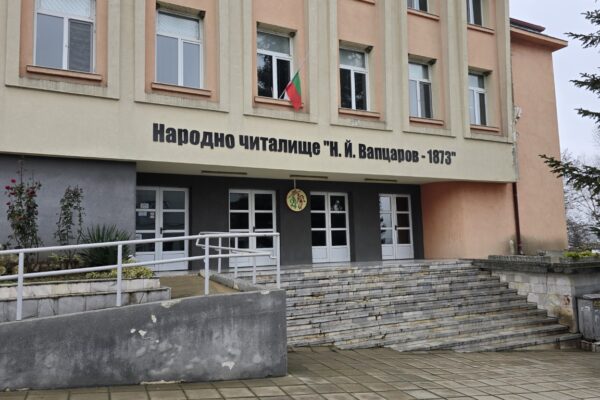
A new community center building was built in 1958-1960. It includes a theater hall, a cinema, and a library. Today, the cultural institution is inactive.
Memorable places
Monument to Panayot Hitov
In 1957, near the village of Dunavets, Tutrakan municipality, a monument-obelisk was erected on the occasion of the 90th anniversary of the passage of Panayot Hitov’s detachment with standard-bearer Vasil Levski. The obelisk was “placed as a proud symbol of the heroism, the courage of the Chetniks and Tutrakans”. It is painted white, in the middle is depicted a red star (five-pointed), and below it a laurel branch, symbolizing glory. The monument is inscribed in 6 lines:
HERE
on April 28, 1867
the detachment passed by
Panayot Hitov
with a standard-bearer
V. Levski
A working group, headed by Aurel Stoyanov, Chairman of the Executive Committee, decided that the celebrations on the occasion of June 2, Botev Day and the fallen heroes in the fight against Turkish slavery, should be commemorated at the monument. The same year, a report by the District Committee of the Voluntary Defense Assistance Organization (DOSO) – Tutrakan reported that on June 1 to June 2, 1957, a celebration was organized in the village of Dunavets, at the place where Panayot Hitov’s detachment had passed, attended by over 1,200 people.
The opening of the celebration began with a performance by the brass band of the Tutrakan Mixed High School, followed by a report on Botev and the heroes who died in the fight against Turkish slavery and fascism in the Patriotic War, and a torchlight procession by the armed rifle platoon of the District Committee of the Bulgarian Armed Forces. From Tutrakan to the memorial plaque in the village of Dunavets, technical training sessions were held by the rifle platoon with the conscripts.
In the following year, 1958, the Work Plan of the Tourist Association “Aleko” – Tutrakan planned a march to the village of Dunavets, to the place where Panayot Hitov’s detachment passed, where a report on the heroic past of the native land would be presented. The same year, on June 1, a celebration was organized, at which the presence of visitors from 16 villages of the district and many enterprises and institutions in the city was ensured. Over 4,000 people attended the celebration. From Tutrakan to the memorial plaque near the village of Dunavets, marches were held with the conscripts, who had a tactical assignment and were armed. For the first time in the district, a march was also organized by a column of motorcyclists, who passed along the longest route to the memorial plaque, in order to popularize the celebration in the most remote corners of the Tutrakan district. Motorcyclists also participated in the column, and a column of hikers with bicycles was also organized. The hikers lay wreaths at the memorial plaque of Panayot Hitov. In 1962, the Tourist Association “Aleko” Tutrakan reported that on June 2, a gathering was held at the Hitov monument near the village of Dunavets, attended by over 3,000 people, some of whom were the student section of the association at the Tutrakan high school. History teacher Georgi Tsachev assisted in the preparation and holding of the gathering.
In the “State Gazette”, issue 52 of 1977, the site was designated as a “Historical site associated with the detachment of Panayot Hitov, which crossed the Danube River in 1867” and was declared as a single historical immovable cultural asset of local importance.
Until the end of the 1970s, annual celebrations were held there on June 2nd – Botev Day, and thousands of people from Tutrakan and nearby villages flocked to it. A reenactment of the descent of Panayot Hitov’s detachment was also held.
In 1978, on the occasion of June 2 – the Day of Botev and those who died for the liberation of Bulgaria from Turkish slavery, the kindergarten teacher Anastasia Yakova, with the cooperation of Liliyana Karastoyanova, teachers at Kindergarten No. 2 (joined to Kindergarten No. 4, today Kindergarten “Patilancho”) organized a celebration, the place was on the bank of the Danube River, where Hitov’s detachment had disembarked and in front of the monument to P. Hitov near Dunavets. The 6-year-old children recreated the landing of Hitov’s detachment on the bank. The young students are dressed in Chetnik uniforms made by the staff. On their heads they have caps with feathers. The children are “armed” with rifles, and they also have a flag with the inscription “Freedom or death”. According to a pre-prepared scenario, the children kiss the Bulgarian shore, then with shouts of “hurray” “take over the hill to the monument. There, girls from the group, dressed in folk costumes, are waiting for them and present them with flowers. A wreath is laid in front of the Hitov monument. Folk songs are sung, children, parents and teachers play the choir.
After the changes in 1989, the monument and the area around it stopped being maintained. Since 2014, the monument and the area around it have been maintained by the local Association for Tourism Development in the Tutrakan Region. The maintenance includes: refreshing the monument, painting, mowing the grass around it. Hikes are organized to the monument, flowers are offered as a sign of gratitude.
A memorial plaque next to the place where the detachments crossed, near the villages of Pozharevo and Dunavets, was unveiled in 1976, on the occasion of the 100th anniversary of the April Uprising. The plaque bears a 4-line inscription:
Here they have set foot on native soil
you read on
Panayot Hitov on 29. IV.1867
Tanyo Stoyanov on 16.V. 1876
It is part of the route of the annual National March “On the Path of Tanyo Voyvoda’s Troop”. Citizens, students and marchers pay tribute to them, offering wreaths and flowers.
Sources:
Dobrudzha newspaper, Babadag, No. 10, July 18, 1917; Nash Glas newspaper. Silistra, No. 21, May 18, 1929; Napredak, No. 3, January 5, 1941; Genov, K., V. Valchev, Iv. Iliev. Dunavets. Our village. 2013; Tutrakan settlement system. Handbook. Sofia. 1985; Popov, Zh., Petar Boychev. Chronicle – chronology of facts and events (1913 – 1940). Ed. Kovachev. Tutrakan. 2015; Mutafov, Vl. History of temples in the Ruse diocese. Part two. S. 2021; Tutrakan Encyclopedia, 2022. History of Tutrakan, T., 2010.
State Archives – Silistra, file 58, op. 9, a.e. 7.