


PRESLAVTSI
Location – It is located 25 km from the municipal center of Tutrakan, 3 km west of the village of Belitsa.
Old names – Çanakçılarbegçisi, Enjeköy (Thin Village). Renamed in 1942 in memory of the 7th Preslav Infantry Regiment, which participated in the Tutrakan epic in 1916.
Population, according to censuses over the years:
1881 – 590 people
1888 – 665 people
1893 – 584 people
1900 – 640 people
1905 – 676 people
1910 – 799 people
1934 – 729 people
1941 – 730 people
1946 – 823 people
1985 – 870 people
2000 – 758 people
2011 – 493 people
2022 – 382 people
First data
A mound necropolis between the villages of Belitsa and Preslavtsi was registered by L. Vagalinski and V. Dinchev in 1992. It consists of eight mounds, of which in 1994, under the leadership of St. Aleksandrov, mound No. 1 was studied. The mound has a diameter of about 25 m and a height of 1.5 m and was erected on grave No. 1. During the Middle Ages, the site was used as a necropolis by a Christian population living nearby.
In the archaeological map of Bulgaria, in the territory of the village of Preslavtsi, another settlement was discovered in the Koronesh area (Chanakchalarski nivi). It is 1.5 km away with a 180 ° azimuth from the city hall. Valley. Altitude 67 – 80 m. Area: about 300 acres. Finds found: tiles from the late Middle Ages and the Renaissance; roof tiles; fragments of a glass bracelet. Medium concentration and multicentric distribution of finds. According to the locals, this place was inhabited in the 1930s.
The settlement arose in the 16th century with the resettlement of Muslim populations from Ottoman provinces in Anatolia.
According to local residents, initially, the current location of the village was inhabited by separate clans in neighborhoods, who moved to the current location due to epidemics that had no cure. Along with the local population, settlers from Dyankovo, Sushevo and Sevar also came from the region.
The main livelihood of the local population was agriculture and cattle breeding.
Preslavtsi during the Renaissance
After the Crimean War, 58,000 Tatars from the Crimean Khanate settled in Dobrudja. In the early 1960s, about 12,000 Caucasian mountaineers – Circassians – also settled here. These processes also included the Tutrakan Kaza. Tatars and Circassians were also settled in Enidzeköy.
According to V. Teplov, there are 1778 Turkish houses in Tutrakanska. According to him, villages with a Turkish population in Tutrakanska kas are: Enjekoy (Preslavtsi), Arabadzhilar (Kolarovo), Akhmatlar (St. Karadzha), Asvatkoy (Glavinitsa), Daudzhilar (Padina), Emirler (Boil), Karamehmetler (Brenitsa), Kasamlar (Osen), Kovanjilar (Terter), Masutlar (Nozharevo), Sarigol (Tarnovtsi), Uzundje Orman (Bogdanci) and others.
According to local historian Boris Iliev, the villagers were resettled from the disappeared village of Daptyka, in whose territory the Sheitan Kulak area once was, and when it was plowed by the people of Beli, they decided to dispute it and reclaim it. A dispute and enmity began between the villagers, which lasted for many years and ended with a court case heard by the Ruse District Court. The people of Beli made the plowed field a school field so that everyone could benefit from it.
According to an extract from an Ottoman register for the households, inhabitants, buildings, lands and taxes of Tutrakan and Tutrakanska kaza, according to the old and new census, in the village of Çanakçılarbegçisi in 1870 it counted:
1. Households (inns) – 40.
2. Residents of Islamic origin
(Turks) – 191 people.
Total population – 191
souls, according to the old description.
Households (households) and residents,
according to the new description:
1. Households (inns) – 71.
2. Residents of Gypsy origin
Muslims – 18 people.
3. Residents of Islamic origin
(Turks) – 174 people.
Total population, according to the new census – 192 people.
On May 17, 1876, six hours before Botev’s detachment set foot on the Kozloduy shore, 28 Chetniks, led by the voivode Tanyo Stoyanov Kurtev, originally from Sliven, crossed the Danube and set foot on Bulgarian soil at the village of Pozharevo in Tutrakan. This was the second detachment of Bulgarian emigration to Romania, created on the idea of Hristo Botev. The path of the detachment initially coincided with the path of the Panayothit detachment from 1867, described in detail by the secretary Iv. P. Karshovski. From the hill of Novite mesto, then covered with a centuries-old forest, it passed through the Gabrovnitsa valley and along the hill between Choban Kulak and Kuidulai descended into the Gyaur Punar valley, along which the Chetniks went out to the fountain at the present-day Antimovo Hanche campsite, where they crossed the road from Tutrakan to Silistra. Here the two roads diverged.
Tanyo’s detachment took the southeastern valley and east of the Circassian village of Kuzgun, which was then Turkish, and stopped to rest at dawn on May 17, 1876. The Chetnik Petar Ivanov wrote: “We slept near a Circassian village… We continue our way to Kurtorman.” The road passed northeast of the village of Preslavtsi in Kasylba and the Turkish village of St. Karadzha at that time and entered the centuries-old Iriasar forest. The detachment headed south towards the Balkan Mountains in order to support the uprising in the Second Sliven Revolutionary District. After three battles, the voivode Tanyo Stoyanov died on Kerchan Bair near the village of Aprilovo. After the death of the voivode, the detachment was defeated.
Preslavtsi after the Liberation
After the Liberation, the settlement was administratively and territorially included in the Tutrakan district, Ahmatlar municipality (present-day village of Stefan Karadzha) with other constituent villages: Kasamlar (present-day village of Osen), Salihler (Bratimir, today deleted), Çanakchilar (present-day village of Panichare).
Enjekoy is a village in Kasylbaş. The Kasylbaş are a special people of Northeastern Bulgaria who speak Turkish and are Muslims, but they worship Ali, the son-in-law of Muhammad, drink wine and brandy, do not go to the mosque, but gather in separate mahlen associations (džems), do not hide their wives from the Bulgarians, because they believe that the difference between them is “as much as the skin between two onion husks”, and the difference with the Orthodox Mohammedans, whom they call Yezidis, they believe is as much as “from heaven to earth” and they do not give or take wives among themselves. The Kasylbaş worship the saints Demir Boba (Iron Father) and Hekim Ali Deniz Boba (Healer Ali from the Sea), whose tombs are in the Sboryanovo and Varnentsi tekkes. Regarding their origin, the Kasylbaş say that they came not from the south like the Turks, but from the north, before the Turks came. Their women dress up in dresses (photi), play hand-held folk dances like Bulgarian women, celebrate Easter (Kyufür gün) and St. George’s Day (Udrales), on which they perform rituals reminiscent of Bulgarian ones for three days. Such are “Nishan chikarma” (Taking and putting on the rings) and “Beshikli” (The Diaper), a large-scale spectacle reminiscent of the ancient Dionysian mysteries of the Thracians and the puppet shows from neighboring Antimovo, where the performers are women, not men.
On July 28, 1913, the Bucharest Peace Treaty was signed, ending the Inter-Allied War and according to its clauses, Bulgaria was forced to cede most of Macedonia to its former allies, Aegean Macedonia to Greece, and Southern Dobrudja to Romania. The village of Enidzeköy passed into the borders of the Kingdom of Romania. A regime of assimilation of the local population began.
The Romanians begin construction of the Tutrakan fortified camp. The activity of building the forts is accelerated and carried out exclusively by the forcibly mobilized population of Tutrakan.
At the end of August 1916, 6 people were kidnapped in Moldova, including two 15-year-old boys.
On September 1, 1916, Bulgaria declared war on Romania and the units of the 3rd Bulgarian Army, on September 1-2, 1916, crossed the Dobrudja border from the Danube to the Black Sea.
On September 3, the 4th Preslav Division, after a short, lively battle, drove the Romanians from their forward positions at the village of Dayder – Chaush Mahle (now deleted). At 9 o’clock in the evening, two Romanian companies attempted a night attack against the division’s left flank, but were repulsed. The division headquarters settled in Dayder – 1.5 km from the enemy. The 1st Sofia Division established itself on the Viskoy line (now Tsarev Dol) to the Enje Koy (now Preslavtsi) – Belitsa crossroads.
Bulgaria wins the epic battle of Tutrakan, but loses World War I.
On November 27, 1919, the Treaty of Neuilly was signed. Bulgaria lost about 10 percent of its territory and was imposed with reparations and restrictions that were unbearable for the time. Under the Treaty of Neuilly, Southern Dobrudja became part of Romania.
In the village of Enjeköy, an Agricultural Cooperative Society for Tobacco Growing “ De ş teptarea ” (“Awakening”) was established.
In the 1930s, families moved to Turkey.
On September 7, 1940, the Treaty of Craiova was signed, by which Southern Dobrudja was returned to Bulgaria. An exchange of an equal number of Romanian colonists from Southern and Bulgarians from Northern Dobrudja was planned. This exchange was to be carried out within three months. On September 21, the Dobrudja population enthusiastically welcomed the Bulgarian army. 35 Bulgarian families from the village of Cherna, Romania, were resettled in the village.
On December 16, 1943, the residents of the village of Preslavtsi submitted an application to the Minister of the Ministry of the Interior regarding their unwillingness to administratively separate from the General Zhekovo municipality and their accession to the Belitsa municipality.
“The village of Preslavtsi has been included in the General Zhekovo municipality not only since the liberation of Dobrudja, but also since the liberation of Bulgaria from Turkish slavery, as a result of which we are strongly attached to the inhabitants of this village and are at the beginning of newly designed measures in economic and public development terms, among which is one [of] the most important, namely the group water supply of the villages of Preslavtsi, Osen and General Zhekovo, for which purpose all plans, sketches, etc., in connection with this work have already been prepared, and the municipality has concluded a 2,000,000 leva loan for the implementation of this first-of-its-kind acquisition for us, which is why, among other things, our revenues from land tax, grazing, etc. are pledged. circumstances, which is that if we go to the village of Belitsa, all these measures will not be able to be implemented for our village and we will be deprived of water for a long time.
2. The forests that our village uses every year are included in the land of the village of General Zhekovo and if we secede from it, we will certainly be deprived of their use, which will have a very bad effect on us, since we do not have forests, and Belitsa does not have enough forests either.
3. The village of Preslavtsi has no boundaries, all our livestock uses pasture in this one, located on the land of the village of General Zhekovo, with a watering place in the same place, and if we are separated from the General Zhekovo municipality, we will be deprived of these benefits.
Preslavtsi after September 9, 1944
After September 9, 1944, it was part of the Stefan Karadzha Municipality as a constituent village, together with the villages of Osen and Bratimir, Tutrakan district.
In 1956 the village was electrified, in 1968 the village’s water supply and sewage system was built, and since 1975 the irrigation system with Danube water.
Until 1964, the population went to the village of Tarnovtsi to use passenger transport. In 1964, a post office was opened, the first head was Eshref Myumyun.
Health services for the population were provided in the neighboring villages of Belitsa and Stefan Karadzha until the opening of a Health Center in 1965, served by Bakie Ibryamova.
The Christians in the village were few, which is why there was no church or chapel in the village. In 1941, the Board of Trustees created the “Chapel” fund, in which it collected donations for the construction of a house of prayer. At the insistence of the parish priest Lyuben Zhekov, the Board of Trustees participated with financial assistance for the purchase of a church house in the village of Tsarev Dol. In 1951, 48 voters were registered on the electoral list for the Church Board of Trustees.
The Bulgarian Christian family resided in the village until around 1960, after which it began to migrate to the villages – Stefan Karadzha, Nova Cherna, Terter, Rainino, etc.
In the first half of the 1960s, families from the village of Varnentsi moved to the village – the Kovachevs, Shakirovs, Eyyubovs, Mustanovs and Mahmudovs.
In 1954, a Turkish summer kindergarten was opened, supported by the parents. It was attended by 40 children.
During the socialist period, the population was mainly engaged in agriculture and animal husbandry. A large unit was built in the village of Brenitsa for the production of industrial crops – hemp and tobacco. There is a cow farm and a sheep farm. A multifunctional building was built, which is used as a town hall, health service, post office and community center.
A new complex point of the Transmariska Industrial Complex in Preslavtsi has been opened, combined with tailoring services during after-hours.
A kindergarten and a primary school have been built. A multifunctional building has been constructed, which houses the town hall, health service and post office.
During the Revival Process, Muslims were renamed, and on January 25 and 26, 1985, the population of Preslavtsi was renamed, which was also the reason for the mass emigration of the population to the Republic of Turkey in 1989. After the fall of the regime, some of the emigrants returned to their native homes.
In the early 1990s, with the democratic changes that occurred, the enterprises were closed.
On July 22, 2004, a non-profit association “Friends of Patilancho” was registered. On October 1, 2008, groups from the villages of Shumentsi, Belitsa, Preslavtsi and Tarnovtsi joined the “Patilancho” Kindergarten. Due to a decrease in the number of children, over the years, the groups in the village of Preslavtsi were discontinued – on September 15, 2009.
Today, the population mainly makes its living from agriculture and tobacco growing.
Mayors: Hamdi Muharrem Mursel, Idriz Jafer Shakir, Jafer Idriz
Jafer, Mikhail Kalinov Ivanov, Mehmed Aliyev Ramadanov, Amdi Mukharem, Turkyan Jeferova Ibryamova, Ali Zylkyarov Aliyev, Ibryam Aliyev Tazimov and Kazam Ali Kazam.
School
The first data on the existence of a school in the village of Preslavtsi date back to 1872, but there is no written evidence for this. In 1935-1936, during the Romanian occupation, the first school building in Southern Dobrudzha was built in the village, which consisted of 4 rooms. And in 1948, 4 more rooms were built. In the 1953/54 school year, Sali Mustafov Saliev was the first local director. Then the gymnasium was built and the school building acquired its current appearance. In the 1956/57 and 1957/58 school years, the school director was Kircho Tsvetanov Kirchov, a native of Kyustendil.
On January 29, 1957, the school was electrified and in the spring of the same year, the yard with an area of 11.5 decares was fenced. In the 1958/59 school year, the construction of a workshop and a sports ground began. In 1959/60, the kitchen and the pioneer room were built. The basketball court was built in the 1960/61 school year. Until 1958, Bulgarians and Turks studied in separate classes – in Bulgarian and Turkish, respectively. On October 6, 1958, in the Primary School
“St. St. Cyril and Methodius” – village of Preslavtsi Bulgarians and Turks began to study together. The same year, the school uniform was introduced. Since the 1995/96 school year, students from the village of Tarnovtsi have also been studying at the school.
By Decision of the Municipal Council – Tutrakan of April 19, 2007 and Order of the Minister of Education and Science of June 12, 2007, the Primary School “St. St. Cyril and Methodius” – Preslavtsi village was closed. The Secondary General Education School “Yordan Yovkov” – Tutrakan was designated as the receiving school.
Community center
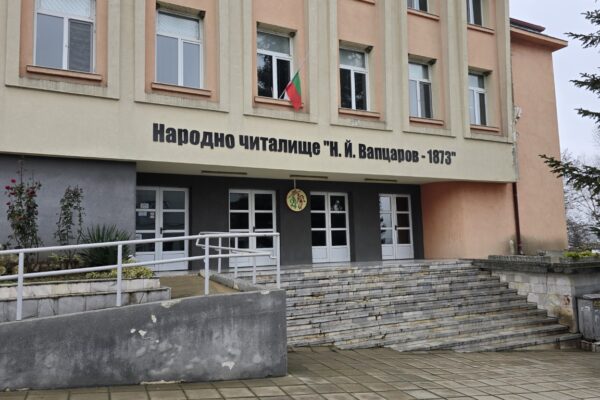
The Svetlina Community Center was founded in 1941 and develops cultural and educational activities. The community center has exceptional importance in the settlement due to the lack of other institutions in the field of culture and education and is the only factor for the cultural growth and development of the population.
The community center is supported by a state subsidy, rent, donations, and membership fees.
In 2021, the “Svetlina -1941” Community Center is organizing the first National Culinary Competition on the theme: “Easter Traditional Kozunacs – 2021”. Participants in the competition will be sent a recipe with a photo of the result of its implementation.
On April 26, 2024, in the “Diogen Vichev” hall of the “Parteny Pavlovich” Regional Library in Silistra, a ceremony will be held to present the Third Annual Awards “Library of the Year – 2023” and “Librarian of the Year – 2023” and the Regional Conference “Library Local History – the Sustainable Memory of the Native Land. Importance of Local History Activity for the Local Community”. The LIBRARIAN OF THE YEAR 2023 prize was awarded to Galina Asenova Salaf, secretary of the “Svetlina 1941” Community Center – Preslavtsi village.
The community center in the village of Preslavtsi also received the “SUPPORT FOR LIBRARIES” award.
The following are organized at the community center: Club “Young Recitator”, “Ladies’ Club”, “Men’s Pensioners’ Club”, knitting club “Yarn and Balls”, club “Sharp Feather”, club “Summer Study”, circle “Hardworking”, Youth Dance Formation “Samodivy”, Women’s Folklore Vocal Group “Second Youth”, Children’s Dance Group “Aliana”, Dance Group “Horoteka”, museum exhibition “Authentic Aliana Costume and Its Contemporary Interpretations”, theater troupe and dance troupes, club “United Mothers”, etc.
TCZS
The Bulganin Labor Cooperative Agricultural Farm was founded in 1955, with 55 member-cooperators, 1,100 decares of its own and 2,400 decares of transferred public land. Yusein Aliev Aptiev was elected its chairman, and Idriz Shakirov Dzheferov was elected host. In 1956, a cow farm was built.
By 1958, all owners entered the farm, the land increased to 9000 decares, and the working livestock, equipment and farm buildings increased. In 1958, as a result of the new agrotechnical and zootechnical measures, the farms of the villages of Belitsa, Varnentsi, Shumentsi, Brenitsa, Preslavtsi and Bratomir were united. The D. Blagoev Agricultural Cooperative – Belitsa village cultivated 89300 decares of land. Spas Boevski was elected chairman. Thus, the united Labor Cooperative Agricultural Farm “D. Blagoev” – Belitsa village worked and operated until March 31, 1959, until the separation of the villages of Preslavtsi and Bratomir. In the spring of 1959, by decision of the Central Executive Committee of the Bulgarian Communist Party and the District Council in Silistra, a new reorganization took place, with the villages of Stefan Karadzha and Osen separating and together with the village of Preslavtsi forming a new TKZS.
In 1980, the economy in the town of Tutrakan was separated as the Agricultural Complex – Tutrakan together with the villages of Nova Cherna, Belitsa, Pozharevo, Dunavets, Tarnovtsi, Antimovo, Tsarev dol, Staro selo, Tsar Samuil, Syanovo, Shumentsi, Varnentsi, Preslavtsi and Brenitsa until 1985, when the Agricultural Brigade /SSB/ – Tutrakan was formed. Since 1991, there has been an independent Agricultural Complex in Preslavtsi.
In 1993, at the beginning of the democratic changes, the cooperative was declared in liquidation and the land was returned to the owners. Today it is cultivated by private farmers.
Sources:
Dobrudzha newspaper, Babadag, No. 13, July 25, 1917; Iliev, B. From Pozharevo, Tutrakan region to Aprilovo, Popovsko. On the path of the detachment of Tanyo voivode from 1876. S. 1996; History of Tutrakan. Ed. Kovachev. 2010; Encyclopedia Tutrakan, T., 2023; Ethnography of Tutrakan, Ed. Gutenberg, 2022. Settlement system Tutrakan, Handbook, Ed. Bulgarreklama, Sofia, 1987. TsDA, f. 288 k, op. 4, a.e. 741, l. 3, 19.