


TUTRAKAN
Location – Tutrakan and its surroundings occupy the southwestern part of Southern Dobrudzha. To the north it borders the Danube River, to the southwest it reaches the Brashlyanska Lowland and Ludogorie, and to the southeast it enters the flat Dobrudzha Plateau. Tutrakan is a municipal center with 15 settlements and an area of 440 sq. km. It is located 58 km east of the city of Ruse and 62 km west of the city of Silistra.
Old name – Transmariska, its name consists of two Latin words – “trans” – beyond and “mariska” swamp, i.e. “beyond the swamps” west of Tutrakan in the Pobrezhie region. The modern name of the city comes from the Proto-Bulgarian military-administrative title “tamantarkan” and translated from Arabic-Turkic is interpreted as “the city of the tarkan, who guards, protects”.
Population, according to censuses over the years
1881 – 7172 people
1888 – 7927 people
1893 – 8,037 people
1900 – 9393 people
1910 – 10,490 people
1927 – 10,107 people
1930 – 11,175 people
1932 – 11,195 people
1940 – 11,375 people
1941 – 8490 people
1943 – 6854 people
1946 – 7,181 people
1955 – 9656 people
1985 – 12,119 people
2011 – 8641 people
2022 – 6910 people
First data
Within the borders of the Tutrakan municipality there are officially registered over 150 archaeological sites. The earliest traces of human activity in the Tutrakan region are flint tools (scrapers, blades, arrowheads). They were made during the Neolithic (New Stone Age) and the Eneolithic (Cephalite Age), i.e. 5500-3000 years BC.
From prehistoric times, the most important archaeological site is the settlement mound from the Late Chalcolithic culture in the Camping area near Tutrakan. Then, man invented the first artificial material – ceramics for his household food vessels. Around 3000 BC. this brilliant Chalcolithic civilization perished under dramatic circumstances. Horse-breeding nomads from the southern Russian steppes invaded the Balkan Peninsula, who destroyed the Late Chalcolithic culture. Life on our lands was interrupted for half a millennium.
By the middle of the third millennium, these same nomads settled here and marked the beginning of the Bronze Age, which lasted until about 1200 BC. On the territory of the municipality there are complexes of settlements from the Early, Middle and Late Bronze Age.
The Roman settlement of Transmariska arose in the middle of the 1st century AD. In the 2nd and 3rd centuries, Roman military units subordinate to the 11th Claudius Legion were stationed here. A new page in the history of the ancient city was opened by the major construction activities and reforms at the end of the 3rd and beginning of the 4th centuries. The city was visited by Emperor Diocletian on October 18, 294. Then the construction of the late Roman fortress of Transmariska began. It covers an area of 65 acres, and the total length of the fortress walls is 1000 m.
By 298–299 AD, the construction of the fortress was completed and it was visited again by Emperor Diocletian. During his visit, an inscription was made that has survived to this day. The inscription reports on the construction of the fortress, called the praesidium, because the prefect of the second part of the XI Claudius Legion resided in it. At that time, Transmariska was one of the 4 military centers along the Roman limes in the province of Lower Moesia. After the destruction caused by the Goths in 376–378 and the successive reconstruction of Transmariska, the city was again severely affected by the Hunnic invasions between 408 and 423 AD.
The barbarian invasions of the last quarter of the 4th century and the first quarter of the 5th century severely affected the city.
By the middle of the 5th century, the life and defense capabilities of Transmariska were stabilized. Until the middle of the 6th century, the city was not affected by the destroyers. The final destruction of the ancient Transmariska occurred at the beginning of the 7th century. Later, in the 12th century, the northwestern part of the Roman fortress was reused for the construction of the medieval fortification of Tutrakan.
The Medieval Tutrakan
The Bulgarian settlement of Tutrakan arose with the establishment of the Bulgarian state. From the end of the 7th to the beginning of the 9th century, the settlement was the center of one of the administrative-political regions of Bulgaria.
At the end of the 9th century, Tutrakan played an important role during the Bulgarian-Magyar-Byzantine wars. Later, the city was subjected to devastating invasions by nomadic tribes. After the final conquest of Northeastern Bulgaria by Byzantium and the demise of the First Bulgarian Kingdom, Tutrakan again became a border military post on the Byzantine border along the Danube River.
After the first quarter of the 11th century, the city and the surrounding area were subjected to devastating invasions by the Pechenegs. In the 12th century, the Arab geographer Idrisi describes the fortress and the city as a flourishing economic center. Most likely, the medieval stone fortification was built in this century. According to the information we have, it occupied the northwestern corner of the ancient Transmariska, with an area of 5 decares and a garrison of 150 soldiers.
In 1388, the Ottomans conquered Tutrakan after a several-month siege and found Tutrakan as a small town, populated by a Bulgarian Christian population, with a small but well-organized, from a military point of view, citadel. A military unit was stationed here.
Tutrakan under Ottoman rule
Information about the Tutrakan fortress was given by Valeran De Wavren in 1445. “The Türkan castle, located on the banks of the Danube, had four walls in the shape of a square, with a small tower at each of the three corners, and at the fourth corner of the mentioned walls there was a large square tower, which was massive, 10 steps high … behind was the space between the fortress wall and the fortress moat, which surrounded the three walls and the tower. There were large moats and a wooden perimeter fence.”
The majority of the local inhabitants are farmers, busy cultivating the fertile surroundings. It should not be forgotten that since the 1580s, Dobrudja and its border regions no longer represent a border region, some military duties have been abolished or greatly reduced, the fortress garrisons and military militia have been reduced or completely abolished. The inclusion of Tutrakan and the region in the Ottoman state has led to its inclusion in a large and regular market. The supply of Constantinople, as a huge consumer center for its time, stimulated the development of the production of cereals and various handicrafts. In addition, Tutrakan is located on a convenient waterway, representing a starting point for sending goods to the vast Ottoman market. Even when living standards were restored after the Ottoman invasion, evidence appeared of the rich and diverse catch on the river, its important importance in the livelihood of the local population, as well as the fees collected for the right to practice it, in its branches or separate reservoirs.
Until the mid-16th century, Tutrakan was a settlement inhabited exclusively by Bulgarian Christian people, who survived despite the vicissitudes of time. At the same time, due to various economic and social reasons, the Bulgarian population gradually decreased from the last quarter of the aforementioned century.
At the end of the next 16th century, the fortress and the surrounding area of Tutrakan were devastated – around 1595. The reason was the constant raids on the territory of the Nikopol and Silistra sanjaks by the detachments of the Wallachian voivode Michael the Brave (1593 – 1601). As researchers note, “the actions of Michael the Brave in Dobrudja (1594 – 1596) were truly destructive. His troops plundered and burned cities and villages, and the population was killed or taken beyond the Danube… Not only the Muslim population fled”. At that time, the city was attacked, plundered and burned.
The Ottoman government fortified Tutrakan, as it considered it the most convenient place for crossing the river and transferring troops during the wars against Turkey launched by the Russian Empire.
In 1773, during the first Russo-Turkish War (1768-1774), fought on the territory of present-day Bulgaria, the commander-in-chief of the Russian army, Gen. Rumyantsev, ordered raids to be carried out along the right bank of the river. In Tutrakan, the Turkish garrison numbered 2,000 infantry, 2,000 cavalry and 4 batteries, located in three fortified camps. On May 8-9, under cover of night, Major General Alexander Suvorov with 700 men crossed the river. The Russian detachment attacked the tabia and batteries of the Turks and captured the city. Suvorov was wounded in the thigh, but continued to participate in the battle until the complete capture of Tutrakan, despite the painful wound… The small Russian detachment defeated the 4,000 Turkish garrison and captured their entire flotilla. In the morning, Gen. Suvorov reported to Gen. Rumyantsev: “Your Excellency, Turtukay has been captured, Thank God, thank you!” The soldiers rephrase the report into poetic form
“Thank God, thank you,
Push and take her there.”
Winged words that the legend will address to Empress Catherine the Great herself. According to the same legend, the enraged commander-in-chief will envy the victory of the daring Suvorov and will threaten him with disgrace and trial, and the empress will issue a resolution: “Victims are not judged.” Suvorov also reported on the results of the crossing of the river: “The huge house of the Pasha and the entire city were set on fire, turned into ashes, and finally the city was ruined. All the living Bulgarians were taken to the opposite bank. The number of families is 187, of which 299 are men and 364 are women.” Catherine II awards the hero at Tutrakan with the St. George Cross of the 2nd degree. As soon as the Russians retreat, the Turks return to Tutrakan again. A redoubt, three batteries and two fortified camps with an embankment facing the Danube were built. On May 17, Suvorov reported to the corps commander, General Saltykov, that the Turks had returned again, with large military forces. On June 17, he attacked the city again. The attack took place at 3 a.m. with 1,500 men. Suvorov defeated a 7,000-strong Turkish garrison, pursuing the retreating troops for 6 kilometers. This greatly frightened the Turks, and the Pasha in Silistra asked for help from the Sublime Porte.
During the Russo-Turkish War (1809–1812), Tutrakan was attacked twice again by Russian troops and the river was crossed twice, transferring significant Russian forces against Turkey.
At the end of the 18th – beginning of the 19th century, Austrian and Russian merchant ships stopped at the Tutrakan port.
The revival of Tutrakan
In 1862, the Bulgarian-Wallachian municipality was established in Tutrakan, consisting of 6 members – three from each of the two communities. They had to be guild members and respected people in the city. One of its main duties was to collect imperial taxes and take care of the social problems of Christian households. Regarding the education of its children, the dualistic municipality decided to expand the school building. The teacher had to know both languages. In case one could not be found, then two would be appointed, respectively for the Bulgarian and Wallachian students. In connection with the construction of the new (Bulgarian) church, the members of the municipality agreed that it would belong to both communities, and in the old church “St. Nicholas” it would only be used for funerals and services in memory of the deceased. There would be four priests – one from each ethnic group for each church. Their approval will be the prerogative of the Rousse Municipality. The representatives before the local mejlis (management council) will be two (as before the unification of the two municipalities), i.e. for each nationality. The united municipality will have its own seal with the name “Bulgarian-Wallachian Society in Tutrakan”, consisting of two parts. One will be kept by the Bulgarian elders, and the other by the Wallachians. It will only be applied unitedly when a given public work is approved by both sides. Another important point of the “Conciliation” is that the united municipality will resolve issues of a social, moral and everyday nature of the households of the two ethnic groups. The signed “Conciliation” also harms the local Bulgarian population in terms of education. It is difficult to find a teacher who knows both languages, let alone only Wallachian. A decision is made that each side of the dualistic municipality will solve its problem on its own. On August 18, 1864. The Bulgarians sought assistance from the Ruse municipality to issue the Pandahus to collect funds for the construction of a school, the purchase of textbooks and a teacher. With the collected 6000-7000 groschen, the house of Dimitar Popov and Tsani Iliev was purchased, which was improved in 1869. It was used as a school until 1880. The first teacher was Nikola Todorov Kopanov from Tryavna.
The misunderstanding between Bulgarians and Vlachs in Tutrakan did not cease even after the division of their united municipality, but the church remained in joint use.
Since the beginning of March 1864, the city has been the center of a district, with more than 40 villages.
Already as the center of the kaza in Tutrakan, the beginning of its development was laid. In 1866, some streets were paved with stone pavement, gas lanterns and a clock were placed in the Varosh neighborhood (today the Fisherman’s neighborhood). A telegraph line Ruse – Tutrakan – Silistra was laid, and later a post office for letters and parcels. The construction of a two-story konak with nine rooms, a zaptiy kaush and an eher for prisoners is nearing completion. A significant part of the households of Tutrakan earn their living from fishing in the Danube River and the lake. In the 60s – 70s, their number reached 200. Most of them work for larger owners. Usually 4 fishermen build a large boat, then for a minimal fee they tie up to a barge on a ship that takes them up to the town of Turnu Severin, where their fishing begins. After nearly two months of work, they return to their homes. “They are happy if they return with a profit of 5-6 golden liras” (500-600 groschen) – writes F. Kanitz. With such an income, they fall into the category of hired workers, i.e. into the poor urban class. Bulgarians and Vlachs earn their living by fishing, and Bulgarians and Turks trade in fish products.
Another typical local traditional craft is boat building, for which Tutrakan has been known since the end of the 18th century. From the middle of the 19th century, several workshops for making “boats”, called “luntaries” and “gems”, appeared along the banks of the Danube. The masters Panayot Grekov, Dimitar Panayotov and Dragan Eklemov are famous. The newspaper “Iztoko Vreme” notes that Tutrakan is famous for “making fishing boats”, which are bought by fishermen on both banks. Livestock breeding is developing, better than most villages in the kazat. This explains the presence of a number of slaughterhouses on the banks of the Danube, although they do not meet sanitary requirements, as well as the development of crafts related to raw materials from livestock breeding. Leatherworking, butchery, the making of tservuli, abadjiystvo and others, whose craftsmen were small livestock producers with low incomes, are developing.
Even in the 1870s, Tutrakan continued to be the most insignificant station for the Danube Steamship Company on the right bank.
On April 28, 1867, Panayot Hitov set off with his detachment for Bulgaria. The standard-bearer of the detachment was Vasil Levski. In crossing the Danube below Tutrakan, to the village of Bulgarian Kosuy, Nikola Barbata provided valuable assistance. From here, the detachment headed for the Kotla Balkans through Deliorman.
On the night of May 16, 1876, the detachment of Tanyo Stoyanov the Voivode crossed the Danube with the canoes of the Tutrakan fisherman Marin Botev. It landed on the Bulgarian shore where Panayot Hitov’s detachment landed.
The construction of the church in Tutrakan took place during the period 1863-1864. The church has three naves, each of the naves ends in the east with a semicircular apse inside and outside. The narthex was added to the west.
According to the original architectural plan, the bell tower of the temple was supposed to be in the dome, above the entrance to the church. However, for structural reasons, the bells were removed from there and another, free-standing bell tower was built, a little to the north of the temple. It has a wooden (paiant) structure and was solemnly consecrated on October 25, 1893. The bell tower was badly damaged by the earthquake in 1977, it was estimated that a lot of money would be spent on its restoration, so in 1990, construction began on a new bell tower in the northeastern part of the temple. There are two bells on the current bell tower. On the larger of them are cast images of the Virgin Mary, the brothers Cyril and Methodius, and Saint Nicholas.
The interior decoration of the Tutrakan church with frescoes was the work of Zahari Tsaniu and his son Stefan (Tsaniu) – bright representatives of the Tryavna painting school. The consecration of the church took place on July 14, 1865 with two patrons – “St. St. Cyril and Methodius” and “St. Nicholas”, as the patron saint of fishermen.
In the newly built church, Bulgarians could read in Slavic on the left side, and only occasionally perform services in Slavic. Thus, Bulgarian priests had difficulty staying and the church service was performed almost entirely in Romanian. After 1913, when Southern Dobrudja was annexed by Romania, the church had only “St. Nicholas” as its patron.
The church is the largest architectural monument in the city from the Revival era. The first memorial service for those killed in the battle for the Tutrakan Fortress in 1916 was held there, as well as the first prayer service for the freedom of Dobrudja in 1940.
On April 12/24, 1877, the Russian Emperor Alexander II signed a manifesto in Chisinau declaring war on Turkey. In order to confuse the Turkish command, even before the Russian troops crossed the Danube, the Russians began artillery skirmishes between the cities of Calafat – Vidin, Giurgiu – Ruse and Oltenitsa – Tutrakan. They continued until May 4. Then the inn and the telegraph station were hit in Tutrakan. Some cannonballs also hit the Varoshka neighborhood, where citizens died. After these artillery skirmishes, the Turkish command sent 400 horsemen from Tarnovo to Tutrakan.
On March 3, units of the 12th Cavalry Division, led by Colonel Ernroth, headed for the city. They entered the city shortly before the joyful news arrived that the peace treaty had been signed in San Stefano. The Bulgarian citizens gathered in front of the church, led by the priest and the city leaders, and solemnly welcomed the Russian soldiers.
Tutrakan in modern times
After the decrees of the Berlin Congress of 1878, large masses of Bulgarians settled in the Tutrakan region. Numerous Bulgarian refugees also came to the city itself, settling in the deserted Turkish houses.
On May 1, 1878, hospital treatment and healthcare began in Tutrakan with the opening of the city hospital, which was among the first 10 organized hospitals in liberated Bulgaria and the first in Dobrudja.
During the first elections in Tutrakan, the first municipal council after the Liberation was elected, headed by the famous Tutrakan church and educational activist Krastyu Stoyanov. Nikola Obretenov was appointed district chief.
At the end of the 19th and beginning of the 20th centuries, Tutrakan established itself as an economic, administrative and cultural center. Russian and Austrian passenger and merchant ships stopped at the port, the river was a carrier of modern European civilization. In 1880, the city maintained foreign trade relations with 17 countries. Tutrakan, with its port, concentrated import and export trade for a region significantly exceeding the scope of its district. Major exporters of wheat, corn, beans and other agricultural products resided in the city. In the active seasons, there was a long line of porters (porters) loading the huge barges for that time.
The periodical press received strong development. In 1902, the first issue of the newspaper “Branitel” was published, a little later the municipality began to publish the “Tutrakanski Obshtinski Vestnik”, where the decisions of the Municipal Council were published. 1903 marked the beginning of several more newspapers “Tutrakanski Vesti”, “Tutrakanets”, “Rukovoditel”, and a few years later the newspaper “Napredak”.
At the beginning of the 20th century, there were two publishing houses, where the works of our and world-famous authors were published, six schools, including a vocational one.
On September 15, 1880, the justice of the peace was opened in Tutrakan.
At different times, there were two soda and lemonade factories in the Danube town. Separately, in the last year, the “Almanac of the Kingdom of Bulgaria for 1911” mentions soda factories. At the end of the 19th century, there was a factory for primary tobacco processing for a short time. They processed about 14,000 kg of tobacco annually. There are 3 brickyards in the town, where bricks (“bricks”) and roof tiles are made by hand.
The fishing and port of Tutrakan most closely link its fate and development with the river of all Bulgarian cities along the Danube. Fishing has been the main livelihood for the city’s population since ancient times, and the Tutrakan fishermen were considered the masters of the Danube. In the late 19th and early 20th centuries, the city established itself as a central center of Danube fishing.
In 1897, out of 7,962 inhabitants, 2,296 were fishermen, making up half of the total number of fishermen in the country. The Tutrakan fishermen applied their professional skills in a wide range – in the West to the city of Vidin and the city of Orshova on the Romanian coast, and in the East to the mouths of the Black Sea, as well as in the Danube canals and lakes on both banks of this stretch.
On January 7, 1907, the Fishermen’s Cooperative Association “St. Nikola”, which was the first fishing cooperative in Bulgaria, united and organized many poor fishermen to fight against usury.
After the Liberation, conditions were created for the favorable development of various crafts. In 1881, there were about 50 craftsmen in the city, who were builders of ships and boats, coopers, wheelwrights, hatmakers, potters, furriers, coppersmiths, goldsmiths, etc. In 1897, the number of craftsmen was already 235. At the beginning of the 20th century, 35 types of crafts were represented in the city, and the number of craft workshops reached an impressive 180. Of the crafts, the most widely represented were boatbuilding, carpentry (carpentry), pottery, wheelwrights, coppersmiths, hatmakers, tailoring, furriers, carpenters, coopers, coppersmiths, goldsmiths, hatmakers, etc.
Since the Liberation, boatbuilding has emerged as the most developed and flourishing craft, and by 1910 Tutrakan became the sole center of boatbuilding in the Lower Danube.
Animal husbandry in the Tutrakan region is the second most important agricultural sector, which has a subordinate position and serves as an additional livelihood for the agricultural population.
Viticulture and the related winemaking are considered to be secondary occupations for the population of Tutrakan and some of the villages in its vicinity.
An Agricultural Fund was opened in Tutrakan on May 1, 1884, it was the successor to the “Commonwealth Fund”, founded in 1865 to lend to fishermen and farmers and restored after the Liberation. However, the Agricultural Fund failed to save many poor and small farmers from the district from ruin.
Agriculture is a secondary livelihood for many small and medium-sized households.
The first post office in the town of Tutrakan was opened with the assistance of the Provisional Russian Government on February 7, 1879. It established connections with Ruse, Silistra and other cities in the country. In 1901, Tutrakan was included in the telephone network of Bulgaria and the first few telephone posts were installed – in the district administration, the municipality and the police. In the following years, the telephone lines were gradually expanded.
A major event for Tutrakan was the welcoming of the head of state, Prince Ferdinand, and his wife, Princess Maria Luisa, in 1893. Before the visit, the Municipal Council decided at its meeting to allocate 500 leva and order a silver tray so that “the dear guests could be welcomed with bread and salt.”
As early as 1881, the first municipal school “Vasil Levski” was built. Its building with beautiful architecture was erected on a donated site by the patriotic Tutrakan resident Racho Genov and his wife Maria. In 1897, a girls’ school was built opposite it. Despite the construction of these solid school buildings, the need for classrooms forced the municipality to take up the construction of another school, which was completed in 1910.
On September 8, 1902, the “Bulgarian” friendship was created, which set itself the goal of uniting the Bulgarian element in Tutrakan for joint actions in defense of national interests.
In 1904, the Gadulka Musical Society was founded. It marked the beginning of choral singing in the city. Its patron saint’s holiday is St. Nicholas Day, which is a reverence for the fishing livelihood of a significant number of city residents.
The upward development of Tutrakan was forcibly stopped after the Inter-Allied War, when, after the signing of the Bucharest Peace Treaty (1913), Bulgaria was forced to cede the territory of 7,500 sq. km to Romania.
Within two years, Tutrakan was transformed into one of the most powerful military fortresses on the Danube River, defended by a 40,000-strong Romanian army.
Bulgaria’s entry into World War I led to the liberation of the territory seized by Romania. On September 5 and 6, 1916, in epic battles at Tutrakan, the Bulgarian military forces, commanded by Gen. Pantelei Kiselov, displayed unparalleled bravery and heroism, the Romanian army was defeated and the city was liberated. The lightning victory at Tutrakan marked the beginning of the liberation campaign in Dobrudja and glorified Bulgarian weapons and the heroism of the Bulgarian soldier throughout the world.
A 4-member commission was appointed in Tutrakan, which performed the functions of municipal government. The first actions were the restoration of the schools in the town, closed by the Romanians, and the establishment of a committee to assist poor soldiers’ families.
On September 29, 1918, with the signing of the Armistice of Thessaloniki, Bulgaria withdrew from the war. On December 24, 1918, the new Romanian municipal administration was established in Tutrakan. During the two occupations of Southern Dobrudja 1913-1916 and 1919-1940, the local Bulgarian population was subjected to assimilation and denationalization, political, social and physical terror by the Romanian government.
On September 7, 1940, the Treaty of Craiova was signed, the Kingdom of Bulgaria annexed the “tortured Dobrudja land and population” to its territory. According to the Agreement to the treaty, a bilateral population exchange was carried out between the two countries. Romanian subjects of Bulgarian origin from Northern Dobrudja were to settle in Southern Dobrudja and the population of Romanian ethnic origin from Southern Dobrudja was to emigrate to Romania.
With a manifesto, on September 21, 1940, Tsar Boris III ordered the Bulgarian army to join this blessed land to the united fatherland. Tutrakan was the first city in the territory of Southern Dobrudzha to welcome the Bulgarian troops, led by the Minister of War, Gen. Teodosi Daskalov. After nearly a quarter of a century of Romanian occupation, Tutrakan was free, and the newly formed Tutrakan City Municipality took on the task of restoring it. Aid arrived from all over the country to overcome the negative consequences of the Romanian occupation. The temporary municipal administration with mayor Hristo Markov managed to create conditions for the reception and accommodation of the settlers, to compile lists of Tutrakan residents subject to deportation, and to restore the school network.
The main problems to be resolved by the next mayor – Petar Drumev and the municipal government are the regulation of trade, the problem of roads, the lack of water supply and sewage, electrification and the expansion of the port.
The September 9th coup was a watershed in the history of Bulgaria. The Fatherland Front seized power, political, economic and social change occurred in Bulgarian society. The Fatherland Front Committee in Tutrakan, with chairman Marin Dyankov, appointed a temporary municipal government composed of: mayor – Ivan Enchev, assistant mayor Lyuben Kantardzhiev and member Grigor Kalchev. After the adoption of the constitution in December 1947, a new temporary government was appointed, headed by Marin Dyankov, until the elections were held on May 15, 1949, when Atanas Draganov was elected chairman of the Municipal Government. Large-scale construction began, not only residential buildings were built, but also farm buildings, production workshops, premises of cooperatives, and industrialization began with the first enterprise – the Hemp Threshing Factory for manual threshing of hemp stalks.
According to the Law on the Nationalization of Private Industrial and Mining Enterprises of December 1947, industrial enterprises and large urban covered property were nationalized in Bulgaria. On December 23, 1947, a total of 27 enterprises were nationalized in the Tutrakan region. Since there was no developed industry in Tutrakan, the nationalization mainly affected rolling mills, brickyards, bricklayers, daracs, etc. The daracs of Georgi K. Lyubenov, Boris P. Kulchev, Vasil Kadikyanov, Lyuben Kunchev, the oil mill of Yordan Velichkov, the printing house of Ivan Chorbadzhiev and the soda-lemonade workshops of Nikola Keremedchiev and Slavi T. Kulev were nationalized, as well as the lands of the large landowners Petar Keremedchiev, Stefan Dyulgerov, Slavi T. Kulev and Ivan Patrashkov.
In December 1947, large agricultural equipment was also nationalized, which became the basis for the formation of machine and tractor stations in the spring of 1948 in Tutrakan.
Since 1951, local bodies of state power have had the following structure – City Municipal Council, Executive Committee and departments and services under the Executive Committee. As local bodies of state power, the People’s Councils are constructed with political, normative, control and constructive powers. They carry out state, economic and socio-cultural policy on their territory, exercising management of all enterprises, organizations and institutions. According to the Law on People’s Councils of 1951, local bodies are called People’s Councils of Workers’ Deputies, and their executive and administrative bodies are Executive Committees, since 1956, local bodies are called People’s Councils.
In 1948, the Hristo Botev Labor Cooperative Agricultural Farm was founded. Large enterprises were built – the Terma Gas Appliance Plant, the Istar Spare Parts Plant, the Slavyanka Plant, the Chetvyarti Septemvri Economic Enterprise, the Lodkostroitel Factory, the Transmariska and Svezhest economic enterprises.
There are transport connections with Varna, Silistra, Razgrad and Ruse by buses and with Ruse, Silistra and Vidin by water transport – rockets and meteors.
In 1974, the only Ethnographic Museum “Danube Fishing and Boat Building” in Bulgaria and on the Balkan Peninsula was opened.
On January 8, 1975, at a meeting of the council for the development of settlements at the ONS – Silistra, a draft general urban development plan and a preliminary conceptual development plan for the town of Tutrakan were adopted.
Until the new plan was drawn up, construction in the city continued to expand. In the period 1971-1973 alone, 8 apartment blocks were completed and built, the traffic police station and the Household Goods Factory were completed, construction of a 24-class school (Y. Yovkov Secondary School) began, a kindergarten and a nursery were built in the Hristo Botev district, and a kindergarten in Teketo. Construction of new apartment blocks, a restaurant, and shops in the upper part of the city began.
In 1981, a ring road, the radio relay tower, and the OSO building were put into operation.
In 1980, the construction of the largest residential complex “Vazkhodi” with panel elements began. To sanitize the city, new garbage collection equipment, sweepers and vehicles for washing and watering the streets and squares were delivered.
In 1982, a program was adopted to involve the population in implementing a program for the improvement and landscaping of populated areas, and hygiene commissions were established in electoral districts. From 1979 to 1981, 44,980 workdays were spent by the population on improvement and sanitation.
One of the biggest tasks in these years was the strengthening of the Danube River bank. The quay wall is an object that finally solves the problem of the city’s landslides and protects it from such disasters. The project was developed in 1979 and finally completed in 1990.
To facilitate the service of the population, due to the growth and development of the city, construction began on a new bus station, a new city market was designed, and to improve medical services, an expansion of the hospital began. The northern facade was decorated, and a little later construction began on an extension of the community center to provide rehearsal rooms for amateurs. The old high school was restored and adapted for a Ritual House, which opened in 1985.
In April 1984, the CCC decided to organize a National Competition “Cooperative Showcase – 1984” in the town of Tutrakan in the period October 10 – 16 of this year. In just five months, the planned 34 sites were basically renovated, built and arranged, 4 of which were new construction, thus giving final shape to “Transmariska” Street. At the same time, a major renovation and reconstruction of “G. Dimitrov” Street, the former central riverside street in the town, was also carried out.
After the changes of November 10, 1989, with the adoption of the new constitution and the Law on Local Self-Government and Local Administration in 1991, the municipal government gained autonomy from the state.
During this transitional period in the governance history of Tutrakan, our municipality has been governed since October 1, 1990, by a Temporary Executive Committee, headed by Nencho Tashev, with the task of preparing the first democratic elections in the country for the National Assembly, municipal councilors and mayors. On October 13, 1991, the first mayor in the history of the city was elected through direct free elections – Vergil Rusev, who took office on October 28, 1991. He was re-elected in 1995 for a second term.
During the period, major repairs and restoration of the murals and iconostasis in the church of St. Nicholas, the bell tower and the auxiliary house to the church were carried out. The restoration of the Theodore House was completed, it was adapted for the exhibition of the Historical Museum, which was solemnly opened on May 17, 1993.
The denationalization and privatization of the territory of the municipality begins. The land division and the return of agricultural lands to their owners begin.
For the first time in 2000, the International Festival of Arts “River Notes” was held in Tutrakan. The first edition of the competition was supported by Prof. Petar Lyondev. It includes performances of children’s and fun songs. The organizers of the competition are the Municipality of Tutrakan and the Municipal Children’s Complex (now the Municipal Center for Extracurricular Activities). In 2009, for the first time there was a section for dance art – modern ballet. In 2017, there were over 150 participants and for the first time there was a new section with the performance of arias and songs from musicals and films – individual and, duets and ensembles in two age groups – up to 12 years and up to 18 years.
A Home for the Elderly was opened in Tutrakan on June 14, 2001. The home is housed in the building of the former Kindergarten No. 3, re-equipped according to a project of the Tutrakan Municipality for the needs of the elderly, with a capacity of 40 users.
For the first time in July 2003, the Apricot Festival was organized in Tutrakan and has been held annually since then. The festival includes an exhibition of different varieties of apricots grown in the Tutrakan Municipality; a culinary exhibition and competition for sweets, pastries and apricot brandy, an exhibition of literature and consulting services to help the producer, attractive games for children, concerts by local groups, the selection of Miss and Mr. Apricot, drawing on asphalt, etc.
At the beginning of the new millennium, the DSH company, part of the American holding “Datapark Group” headquartered in California, purchased the Terma PGI and invested over 3 million leva to renovate the factory’s buildings and equipment, but subsequently changed production to the field of automated systems.
In the local elections of 2011 and 2015, GERB won the mayoral seat in Tutrakan Municipality with the election of Dr. Dimitar Stefanov. He was elected as an independent candidate in the 2019 and 2023 mayoral elections and is the longest-serving mayor to date.
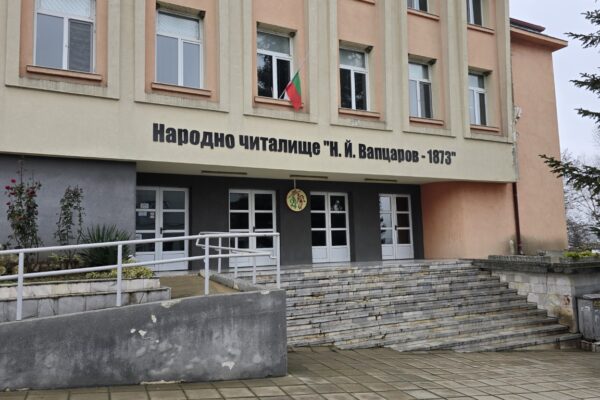
Since 2012, the Municipality of Tutrakan has been organizing an annual celebration of the St. Nicholas holiday on December 6 with a number of events. In the morning, a solemn liturgy is celebrated in the church “St. Nicholas”, after which a procession heads from the church to the boathouse, where water is blessed for health. The “Clover” dance group at the “N. Y. Vaptsarov – 1873” National Theatre recreates an old fishing custom of welcoming the fisherman with a carp catch, cleaning the fish scales and baking it, and recreating the election of a vataf – the leader of the fishing tribe. Later, the event continues at the Municipal Center for Extracurricular Activities – Tutrakan, where a culinary exhibition of St. Nicholas fish dishes is organized for the entire local community, a stuffed carp competition for professionals and amateurs, a St. Nicholas cocktail, as well as an exhibition of children’s drawings on the theme of “St. Nicholas”.
On December 6, 2013, for the first time in the history of Tutrakan, the festive Holy Liturgy in honor of Saint Nicholas and for the well-being of the residents of the Tutrakan Municipality was celebrated by His Holiness the Patriarch of Bulgaria Neophyte. After the service, the Patriarch consecrated the only Ethnographic Museum “Danube Fishing and Boat Building” along the Danube River.
For the first time in Tutrakan, the rock festival “July Morning” was organized on July 1, 2013, but it was not held due to torrential rain. A year later, on the evening of June 30, 2014, the rock festival began. July is organized in many places in Bulgaria, but only in Tutrakan it starts at 8 p.m. on June 30 with the last June sunset and ends with sunrise on July 1. It is held on the “Lodkostoyankata” meadow, in close proximity to the Danube River. It is visited by many people from all over the country and abroad. Over the years, the sunrise has been greeted by the author of the song of the same name, Ken Hensley, John Lawton, Joe Lynn Turner, BTR, etc. The organizer of the rock festival is the Tutrakan Municipality.
In 2013, the Tutrakan Municipality restored five houses from the Fisherman’s Quarter: a house with an exhibition of boats and the history of boat building; a house with an exhibition of fishing nets and demonstrations of their weaving; a house – an exhibition and tasting center of traditional alcoholic beverages for the region (apricot brandy); a house – a visitor center; a house with an ethnographic exhibition “The Fisherman’s House” with original tools, instruments and other exhibits related to economic activity, crafts and household activities. The central street is also being renovated – cobblestone paving is being laid, the lighting is being renewed.
In 2016, a Family-Type Accommodation Center for Children and Youth without Disabilities was opened, which provides social services to children deprived of parental care.
On September 21, 2018, in the plenary hall of the National Assembly, the representatives of the 44th National Assembly unanimously voted for Tutrakan and Dobrich to receive the title “City of Bulgarian Military Glory”.
On April 18, 2024, the “Tutrakan Epic – 1916” museum was opened at the “Military Cemetery – 1916” Memorial. It presents the wars for national liberation and unification of Bulgaria.
Sources:
History of Tutrakan. T. 2010; Encyclopedia Tutrakan, T., 2023;
https://www.nsi.bg/nrnm/reports/population/list/4834
https://www.nsi.bg/statlib/bg/lister.php?iid=DO-010000010&page=105