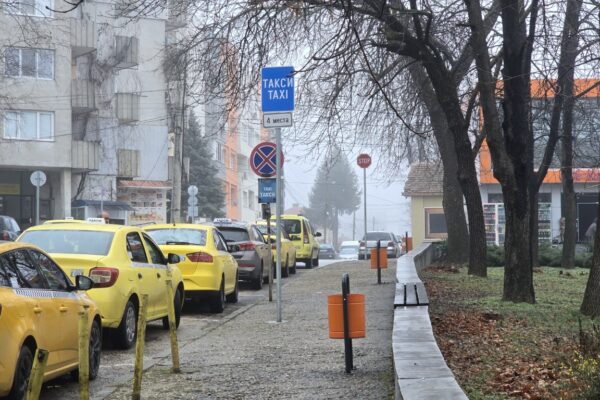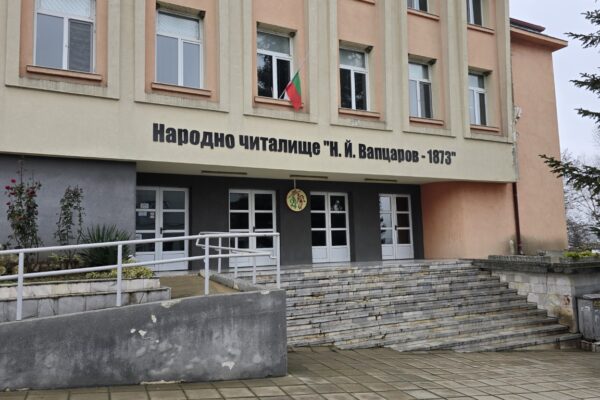



SYANOVO
Location – 7 km from the main road Ruse – Silistra, 7 km from the village of Nova Cherna, 20 km south of Tutrakan, 53 km east of the city of Ruse, 81 km west of Silistra
Old name – Senova. From hay. Incorrectly written as Senovo. The error was corrected by a decree of 1966.
Population, according to censuses taken over the years:
1881 – 626 people
1888 – 775 people
1893 – 837 people
1900 – 964 people
1905 – 1033 people
1910 – 1206 people
1938 – 997 people
1941 – 380 people
1946 – 684 people
1946 – 684 people
1985 – 195 people
2000 – 136 people
2022 – 36 people
First data
In the Archaeological Map of Bulgaria, Syanovo is present with an open grave mound in the Srabcheta area.
A settlement was discovered in the Paskanlaka area. Area about 300 acres, ceramics from the Iron Age – Roman Age, Late Antiquity (tiles from this period are often decorated with polished stripes), First Bulgarian Empire, Late Middle Ages were discovered. Until the 1950s, there was a monastery “St. Marina”.
The settlement arose in the 16th – 17th centuries.
The Gypsies turn out to be an old population in Dobrudja. Documents from the end of the 18th century show that in Dobrudja there are Muslim Gypsies and Christian Gypsies, as well as settled and wandering Gypsies. There are apparently Gypsies in all the kazys of Dobrudja. According to the census carried out in Turkey in 1865, 69 Gypsies (45 Muslims and 24 Christians) were recorded in the town of Tutrakan. Their number is significant in the village of Syanovo. According to information from elderly people, originally from the village of Syanovo, described in the Chronicle Book of the school, the old name of the village was Yaala – Syanovo, which was interpreted in two ways, with fertile land – yalia, with many pastures and rich in hay, as a result of which there was also a lot of livestock, a lot of meat, milk and butter, from which the other interpretation is Mazno Syanovo. After the departure of the Turkish population, it was called only by the Bulgarian name Syanovo.
During the Russo-Turkish War of Liberation (1877–1878) and after it, the Turkish beys, hodjas, Circassians and a large number of Turkish peasants, gripped by religious fanaticism and fear, fueled by foreign propaganda, left their lands and fled south to Constantinople and Asia Minor. As a result of this flight, a large number of farms and smaller farms remained free. After the Liberation, the migratory flow of Balkan farmers flowed into the Tutrakan region. Here there is water and pasture for livestock, there is free land and houses for everyone. At the beginning of the 20th century, there were also migrants from the Balkans in Syanovo.
Syanovo after the Liberation
At the end of the 19th century, the village was administratively and territorially included in the Tutrakan district, as a constituent village of the Staro Selo Municipality. In 1894, a primary school was opened in the village of Syanovo.
In 1911 it was a constituent village in the municipality of Staro Selo with another constituent village: Siyahlar (Angelovo, today deleted).
During the Romanian occupation, the village continued to be administratively within the borders of the Tutrakan district.
In 1908, an Agricultural Society was established in the village.
On July 28, 1913, the Treaty of Bucharest was signed, ending the Inter-Allied War. It established peace between Bulgaria, on the one hand, and Romania, Greece, Serbia and Montenegro, on the other. With the Treaty of Bucharest, Bulgaria was forced to cede Southern Dobrudja to Romania. The village of Syanovo became part of the Kingdom of Romania.
After the first Romanian occupation through the New Dobrudja Law, seventy-four senior Romanian military and political figures acquired properties and became the largest landowners in the region. Among them, E. Mishkinescu stands out with 77 hectares in the land of the village of Syanovo.
29 were kidnapped from Syanovo to Moldova. From June 27 to November 14, 1917, the newspaper “Dobrudzha” published in Babadag searched, compiled and published a detailed list of names of the kidnapped Dobrudzhans, distributed under the name Martyrology of the Dobrudzhan Princes, including the kidnapped residents of the village of Syanovo.
On September 12, 1919, in addition to the local Romanian administration, 4-5 Entente soldiers – blacks were sent to the Tutrakan villages. On the western outskirts of the villages of Syanovo and Türk Smil, two posts were set up, each staffed by two French soldiers – blacks, in addition to the Romanian guards. The Romanian authorities continued to recruit soldiers from the local Bulgarian population.
On November 27, 1919, the Treaty of Neuilly was signed between Bulgaria and the Entente, which put an end to our country’s participation in World War I. Southern Dobrudja again passed into the borders of the Kingdom of Romania. A regime of assimilation of the local population began, it was forbidden to speak Bulgarian, and the Bulgarian school was closed.
However, the terror, robberies and murders continued – gangs, including disguised gendarmes, attacked the villagers in Syanovo. Hundreds of residents of Tutrakan and the villages were forced to emigrate.
Between 1919 and 1928, several thousand families emigrated from Tutrakan and the villages of Pozharevo, Shumentsi, Zafirovo, Belitsa, Syanovo, etc.
The information from the Silistra District Administration is interesting, according to which in 1933 there were 51 members of the VDRO in the district, of which 7 people were from Tutrakansko, including Dimitar Georgiev from the village of Syanovo.
On September 7, 1940, a treaty was signed in the Romanian city of Craiova, which obliged Romania to return Southern Dobrudja to the borders of the Kingdom of Bulgaria.
On September 11, 1940, Nikolay Evstatiev was seconded by the Minister of Internal Affairs and Public Health to be the mayor of Syanovska Rural Municipality, Tutrakan District. He held this position until August 7, 1941. On June 15, 1942, he was transferred to be the Tutrakan District Governor.
After the Craiova Agreement, in 1940, settlers from Northern Dobrudja settled in the village. The population is engaged in agriculture.
There are settlers from the Razgrad, Ruse and Targovishte regions who then left it (1950).
The population is engaged in agriculture and animal husbandry. There is a field and animal husbandry brigade at the Agricultural Complex – Tutrakan. The field farmers take care of an apple orchard of 1800 decares and produce tobacco, and the animal husbandry farmers raise sheep and calves for fattening.
Near the village there is a large mixed deciduous forest called Syanovska or Cherna Gora.
At the end of the village there is a shrine with a stone cross. No one remembers when this cross was placed. Before 1918, a sacrificial offering was made at this place on the Ilinden holiday, restored in 1941 by grandfather Trifon Sabanski.
In 1947, in the presence of about 80 residents of the village, the Pobeda Rural Consumer Cooperative was founded. Nikolay Petrov Dimitrov was elected chairman, and Radi Chokoev was elected deputy chairman. With the share capital that was collected, about 100,000 leva, the cooperative began its activities, and in addition to lending to residents of the village, its other activity was the purchase of agricultural products. The cooperative strengthened its activities, increased the share capital and membership, and provided material assistance to the population to meet their needs.
In 1957, the residents of the village of Syanovo self-taxed themselves so that electrification could be carried out. During the socialist period, the village had a field and livestock brigade at the Agricultural and Industrial Complex – Tutrakan. The field growers took care of the 1800 decare apple orchard and grew tobacco, while the livestock breeders raised sheep and calves for fattening.
School
At the end of the 19th century, there were two religious schools in the village of Syanovo.
The primary school in the village of Syanovo was opened in 1894. There was no special school building, and education was conducted in a tavern owned by an old villager. Only boys were educated.
For six years, the teacher Stoyan Kanchev, a native of the city of Silistra, a graduate of the Silistra Pedagogical School, worked there. Later, the teacher Stoyan Pintev worked at this school for five years.
In 1860 – 1896, there were two Turkish religious schools in Syanovo, which were closed during the Romanian occupation and here, as in all of Southern Dobrudja, the Bulgarian school was closed and a Romanian one was opened in its place.
In 1922-1923, a single-story school building with stone foundations was built, consisting of two classrooms. Education was conducted by Romanian teachers, with Bulgarian and Romanian children studying together.
After the signing of the Craiova Agreement, a compact Bulgarian population from the village of Cherna settled in the village of Syanovo. The school was opened in 1941, the teacher was Radka Popova. In the one-class school of the village of Syanovo, during the entire period of its existence for a little more than 20 years, non-local teachers from Pleven, Dolen and Goren Dabnik, from Lukovit and other regions of the country worked. The school’s directors were Mariana Hristova from Syanovo, Aurel Valkov from Silistra, Lyuben Alipiev, and Vyara Shabanska.
Despite all the inconveniences associated with the remoteness and isolation from the village of Syanovo, despite the high turnover of teaching staff, the school and family have achieved the greatest possible synergy here. The school’s material resources are poor, there are no physics and chemistry materials, a labor training workshop, and there is a basketball court. In 1959, a gymnasium was built with self-tax funds. Excursions are held by a truck of the TKZS.
Students help harvest at the TKZS near Ruse, Lovech, Pleven, etc.
Since 1963, an evening class has been opened for the first time, and evening classes for adults have been held.
The closure of the school caused a mass exodus of the population in the city of Ruse and currently about 30 people, mostly pensioners, live in the village of Syanovo.
About a kilometer from the village is the Syanovsk Monastery “St. Marina”.
Church
From a report from October 6, 1940 by Father Tsvyatko Kanchev we learn about the first chapel in the village: “The colonists took an uninhabited old house, located near their neighborhood, and adapted it for a chapel, where they performed their religious needs. The house was abandoned by the Bulgarian owner, who fled to Bulgaria… The owner of the house – a chapel, probably returned and took shelter in his house.”
When they left, the Romanians took the bell, the Holy Chalice, the books, the icons and the collected money. After 1918, the Bulgarians secretly crossed the border at night and fled into the interior of the country. Many uninhabited houses remained. In one of them, owned by Mincho Spasov, the Romanians built the first chapel. They moved the Bulgarian bell to the yard, which had been placed in another place until then. Some of the Bulgarians also attended the services in the chapel. The chapel existed until 1941, when the Spasov family returned to their home. Mincho Spasov collected the church belongings and took them to Trifon Sabanski. In addition to the priestly vestments, books and newspapers, there was a silver cross weighing two kilograms. The bell was moved to the plot of land designated by the municipality, where a church has now been built.
The idea of building a chapel in the village arose in 1946. The Diocesan Council gave its consent for the chapel and the goal was to withdraw 80,000 leva from BZKBanka, but construction did not begin.
On April 26, 1946, the representative of the people Simeon Kovachev turned to Chorbadzhiev, who was also the proxy of the former Romanian Minister Bichulescu for the courtyards and land, to assist in providing a plot of land for a church. Chorbadzhiev pointed to a plot of land in the center of the village, recommended that the priest place a wooden bowl with a bell and begin the construction of a chapel as soon as possible. Construction did not begin and the chapel was not built.
In 1994, the Diocesan Council at the Metropolitanate approved an original project for the church “St. Prophet Elijah” in the village of Syanovo, prepared by arch. Steliana Dimitrova from Silistra. The building is a single-nave basilica with dimensions of 17 m long, 7 m wide, 3.5 m high. The bell tower is above the entrance. Construction began in 1994. The roof was installed in 1999.
Near the village there is a votive monument where a sacrifice is made for health.
Labor-cooperative agricultural farm “Vulko Chervenkov” – village of Syanovo
On September 7, 1950, the Labor Cooperative Agricultural Farm (TCAF) “V. Chervenkov” – village of Syanovo was founded by 28 agricultural farms. In 1950, Ivan Liptev was elected chairman, who was replaced by Radi Nikolov Chakoev on December 23, 1950, and Ivan Georgiev Penchev was elected chairman of the control board. At the time of its founding, 1080 decares of land were cultivated, the working livestock was 30 horses, 8 oxen, 10 cows, 380 sheep.
In 1954, the cooperative members numbered 41 people with a total of 1836 acres of land, with 109 able-bodied members, distributed among 3 units in one field brigade and one mixed one – livestock breeding. The Chairman of the Management Board was Ivan Valkov. In 1955, the number of members increased to 46 farmers.
In 1958, the farm had 205 cooperative members and about 7800 decares of arable land. In 1958, the farm merged with the Georgi Dimitrov Agricultural Cooperative in the village of Nova Cherna under the name Georgi Dimitrov Agricultural Cooperative in the village of Nova Cherna.
In 1971, the farms of the villages of Nova Cherna, Staro Selo, Belitsa, Malak Preslavets and the town of Tutrakan were united in the Agricultural and Rural Development Complex “Dunav” – Tutrakan, which functioned until 1973, after which it merged into the Agricultural and Rural Development Complex “Drustar” – Silistra as a branch farm. In 1980, the farm in the town of Tutrakan was separated as the Agricultural and Rural Development Complex – Tutrakan together with the villages of Nova Cherna, Belitsa, Pozharevo, Dunavets, Tarnovtsi, Antimovo, Tsarev Dol, Staro Selo, Tsar Samuil, Syanovo, Shumentsi, Varnentsi, Preslavtsi and Brenitsa until 1985, when the Agricultural Brigade /SSB/ – Tutrakan was formed. After the changes in 1989, the Agricultural and Rural Development Complex was declared in liquidation.
Monastery “St. Marina”
Near Syanovo is the monastery of St. Marina. There is a spring with healing water in the chapel. A small child regained his sight after washing his eyes. Local people remember Grandma Vasilka, who fainted and had dreams with which she prophesied. The monastery declined during the Romanian occupation of Northern Dobrudja and was revived after 1940. In 1944-1945, with funds collected by Christians who visited the spring every day from the nearest villages in the area, a small chapel was built around the spring itself, and with the personal donations of Donka Hlebarova from the village of Nova Cherna – three rooms for pilgrims. The day of St. Marina was designated as a temple holiday – July 17. For a certain period, it existed as a nunnery, since it is known that around 1950, nun Thekla entered here. Her earthly path ended tragically in 1960 in this remote – albeit divine place. Along with the death of the nun, a rather difficult period began in the existence of the Syanovsk monastery. The buildings built up to that point were declared illegal. Criminals constantly threatened the arriving pilgrims with their bad actions, and in their fear – the Christians began to retreat, and the monastery – to collapse. In 1991, the local people, with the support of the Ruse Diocese, took general action to restore the lost traces of faith. The spring was rediscovered, and a chapel was erected above it, with the help of the local population and the local master Nikola Sabanski. Believing Christians and pilgrims from near and far again began to seek salvation and faith near the healing spring. Namely, after the construction of the small monastery building, our host entered here as a novice, and later was tonsured a monk. Since the monastery does not have a church – one of the rooms has been adapted and functions as a monastery church, in which you can still light a candle and pray – if you wish. Today, Syanovski Monastery is the only monastery in Dobrudzha with a holy spring.
Prominent personalities from the village of Syanovo
Trifon Marinov GEORGIEV – professor, lecturer in plant breeding. He was born on October 7, 1923 in the village of Syanovo, Tutrakansko. In 1943 he became an infantry reserve officer. In 1948 he graduated from the Faculty of Agronomy in Sofia. He worked for 21 years as an agronomist in a machine-tractor station, in a labor-cooperative agricultural farm for seed production, in a research institute. He taught “Fundamentals of Plant Breeding” for 22 years at the Higher Institute of Mechanization and Electrification of Agriculture “Angel Kanchev” – Ruse. He is the creator of new corn hybrids used in Bulgaria and abroad. He specialized in France and the USA. Doctor of Sciences, associate professor, professor, chairman of the Union of Scientists in Ruse, member of four international scientific organizations. He participated with reports in congresses and conferences in England, France, the USA, the USSR, Slovakia, the Netherlands, and China. Member of Parliament in the 7th Supreme National Assembly in 1990–1991.
Sources:
DA – Silistra: f. 347; f. 404; 442, f. 744, op. 3, a.e. 18 Chronicle of the school in Syanovo.
Dobrudzha, Babadag, No. 15, July 30, 1917; Vladimirov, P. History of the primary school “St. St. Cyril and Methodius” village of Nova Cherna, Tutrakan municipality (1899 – 1999). Nova Cherna. 2002; Mutafov, Vl. History of the temples in the Ruse diocese. Part Two. S. 2021; History of Tutrakan. Ed. Kovachev. Vol. 2010; Encyclopedia Tutrakan. Ed. Gutenberg. Vol. 2023.
https://libsilistra.bg/index.php/10-2017-02-08-13-49-00/912-2020-11-27-12-56-49.html
https://www.nsi.bg/nrnm/reports/units-details-by-event/80611
https://www.nsi.bg/statlib/bg/lister.php?iid=DO-010000010&page=105